


Home› News›First Winter Boots for a Toddler Who Walks
First Winter Boots for a Toddler Who Walks
Last winter they sat in the stroller. This winter they will stand in every puddle. Four things the boot now has to do, why you size with the sock on, and what you still do not need.
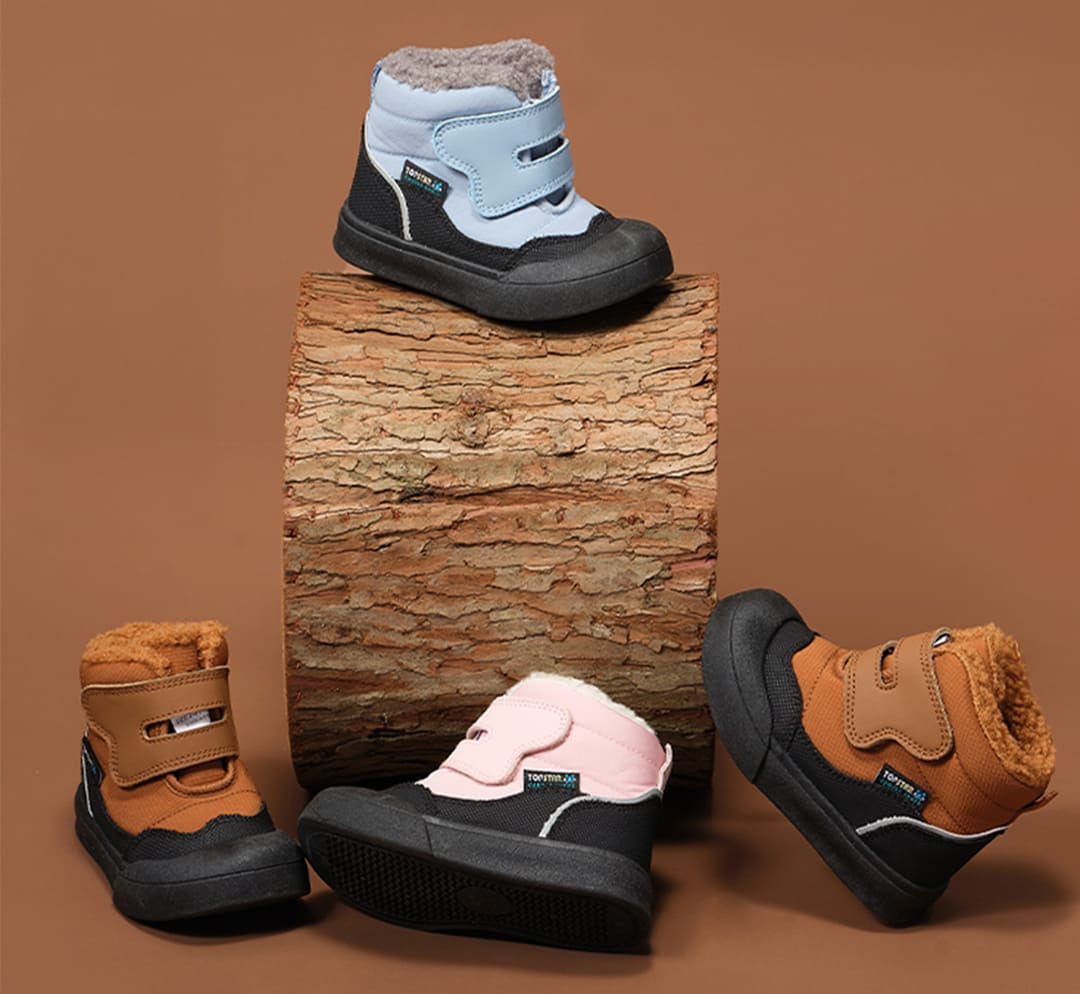
Last winter they sat in the stroller. This winter they are going to stand in a puddle, walk through slush and insist on the snow. That changes the boot. Earlier in the year we wrote about winter boots for a baby who cannot walk yet, where warmth is the whole brief. For a toddler who walks, warmth is only the start.
Four things the boot now has to do
Keep water out. A walking toddler goes through every puddle on purpose. A water-repellent knit that was fine in a stroller is wet through in a minute on the ground. Look for a sealed lower section, a rubber or coated toe and a sole that comes up the side of the boot a little. The upper can still breathe. The bottom third cannot.
Grip. Wet leaves, ice at the edge of the sidewalk, a smooth tile floor at the store entrance. A deep, soft rubber tread under the ball of the foot is the difference between a slip and a step. Press the sole with your thumb. If it is hard and shiny, it will skate.
Still bend. This is the one that gets lost in winter. A boot can be warm, waterproof and gripped and still be a plank. Hold the heel and the toe and fold it. It should flex at the ball of the foot, not fight you. A toddler in a rigid boot walks like a toddler in ski boots, and tires in half an hour.
Stay light. Lined boots get heavy quickly. Pick it up. A boot that feels substantial to you is a brick on a leg that weighs almost nothing.
Size with the sock on, then add room
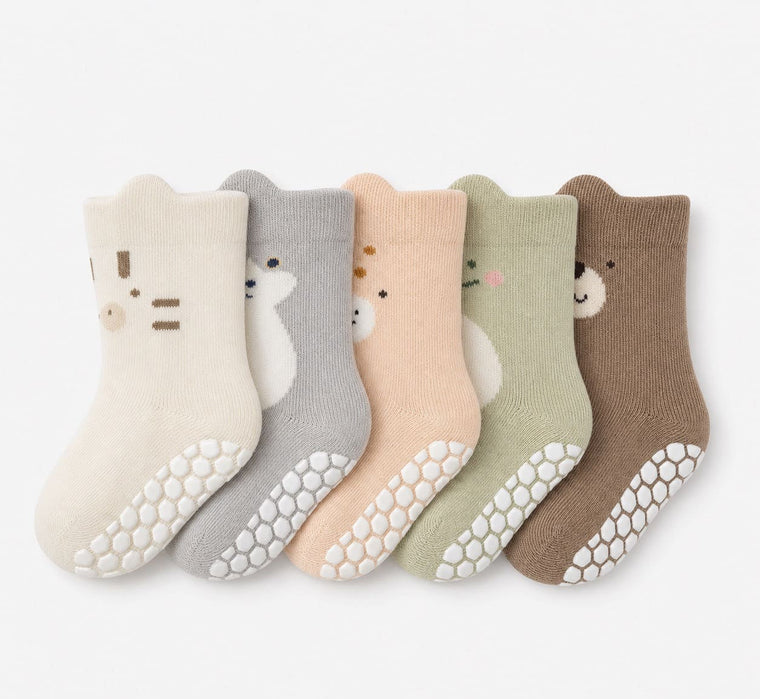
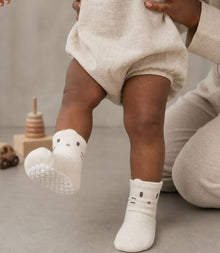
This is where most winter boots go wrong, and it is the same mistake we described in socks under baby shoes. Measure the foot wearing the actual winter sock, standing, heel to the wall. Then add 0.4 in (1 cm). A lined boot takes up more room than a shoe, so if your child is between sizes, go up.
The chart in our size guide shows foot length and insole length side by side, which is exactly the number you need when there is a sock in the way. The measuring method is in how to measure your baby's feet.
And do not buy them in September. Whatever you buy before it is cold will be measured against a foot that is going to be bigger by the time you need it.
The opening
A high boot with a narrow shaft is a fight twice a day. What works: a wide opening that unfolds flat, a hook-and-loop strap across the ankle, and ideally a pull loop at the heel that your child can tug themselves. Zips are fine if they go most of the way down. Laces on a toddler boot are a trip hazard in a wet mitten, and there is a longer list of what helps in getting shoes on a child who does not want them.
What you still do not need
Ankle support. A high, stiff shaft does not strengthen anything, it just stops the ankle moving. Arch support, for the same reasons as always. And a boot rated for serious cold if you live somewhere with mild winters. A lined, water-resistant boot handles most of the country. Save the expedition boot for the snow trip.
Indoors, take them off
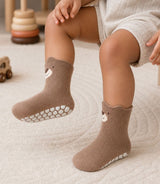
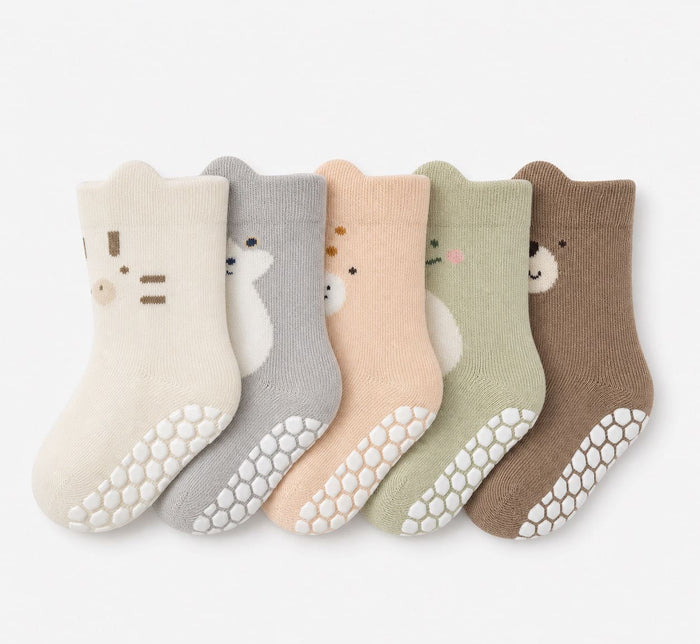
A warm, lined boot on a warm floor is a sweaty foot within twenty minutes, and a sweaty foot in a wet boot is a cold foot by the time you are back outside. At daycare, at a friend's house, in the store: boots off, sock shoes or grip socks on.
Looking after them
Salt is harder on a boot than snow. Brush it off dry, wipe with a damp cloth, and dry slowly with the insoles out and the boot stuffed with paper. Never on the heater. The drying mistake that separates the sole from the upper is in how to clean baby shoes.
The short version
- Sealed bottom third, deep soft tread, still bends at the ball, light in the hand.
- Measure with the winter sock on, add 0.4 in (1 cm), go up if between sizes.
- Wide opening, strap or zip, no laces.
- Off indoors.
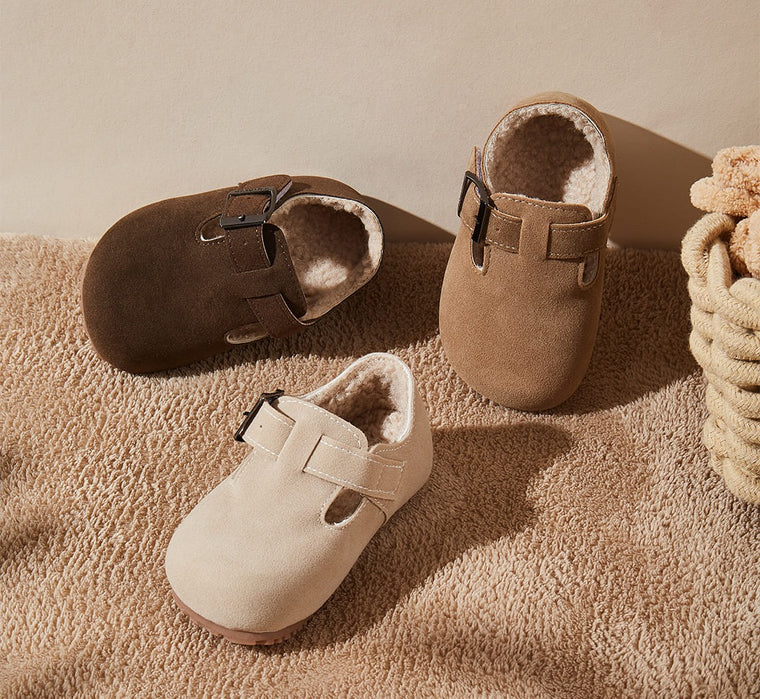
Our winter boots are lined and flexible, and every pair lists the foot length in inches so you can size with the sock on.