


Home› News›Winter Boots for a Baby Who Cannot Walk Yet
Winter Boots for a Baby Who Cannot Walk Yet
A pre-walker does not need support or tread. It needs warm feet in a stroller in February. That is a different boot, and a cheaper one.
A baby who cannot walk yet does not need a winter boot in the way an adult does. Nothing has to be supported and nothing is going to be scuffed on a sidewalk. What that baby does need is to stay warm in a stroller in February, when it is cold, damp or both.
That is a different job, and it wants a different boot.
Warmth is the whole brief
Feet are the first thing to go cold on a small child, and a baby sitting still in a stroller is not generating any heat through movement. So the boot has one main task: hold warm air around the foot and keep the wind off it.
Everything else that a grown-up winter boot does, the stiff ankle, the deep tread, the rigid heel, is either useless here or actively unhelpful. If you want the reasoning behind that, we went through it properly in Do Babies Actually Need Shoes?
What to look for
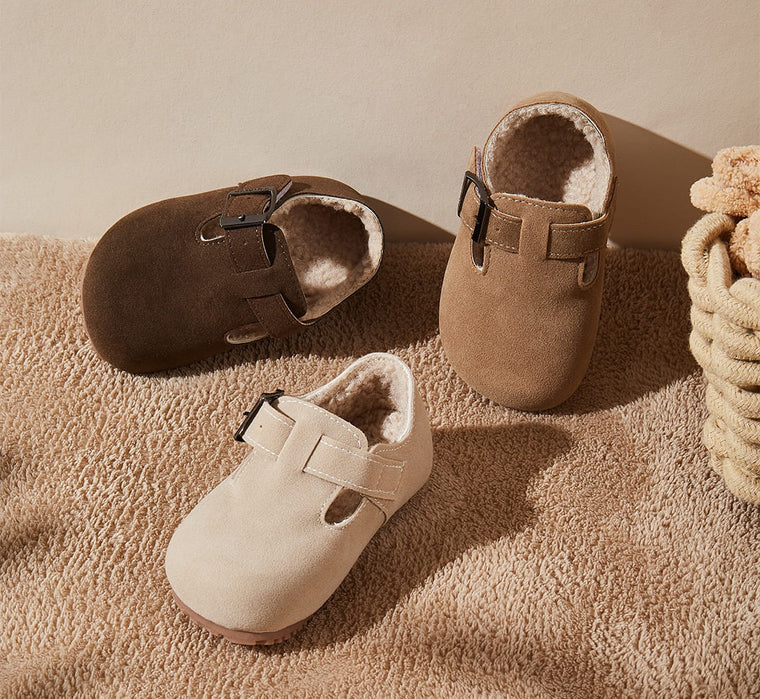
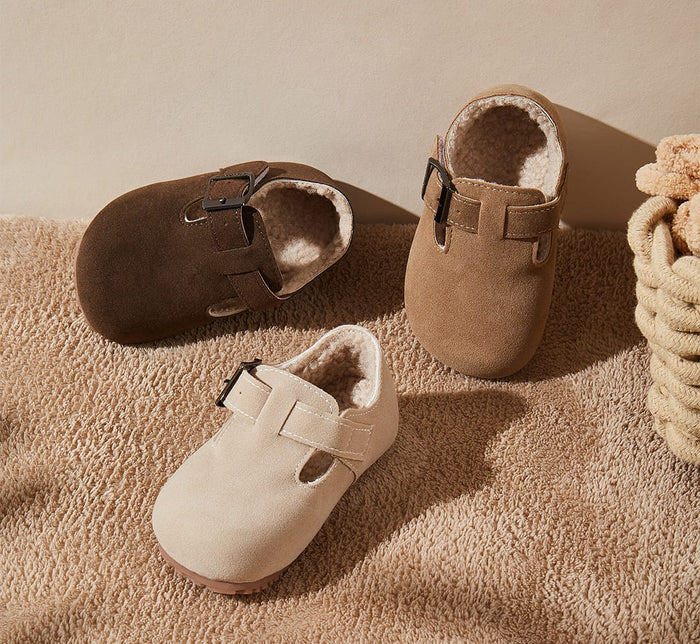
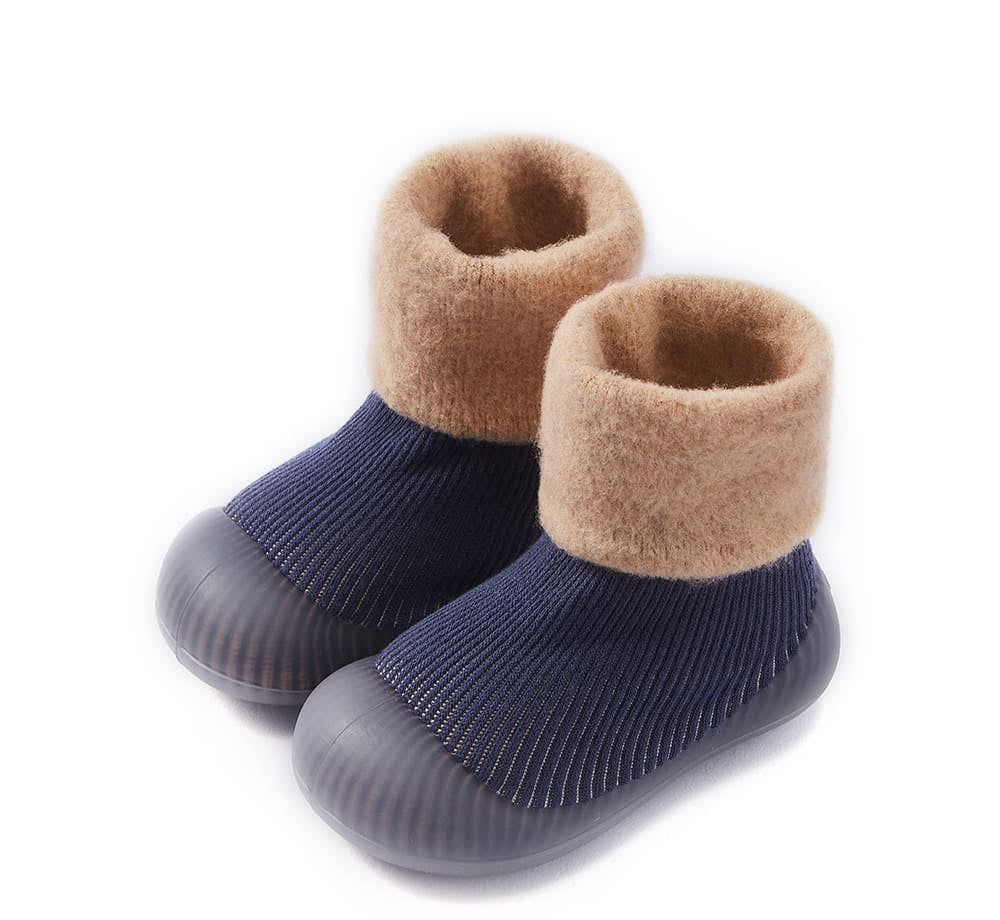
A soft lining that goes all the way around. Fleece or a brushed knit. Check inside the toe, not just the ankle. A lot of boots line the shaft and leave the toe bare, which is exactly where a cold foot starts.
An elastic or wrap-over ankle. A pre-walker will kick, and a stiff opening either gets kicked off or has to be done up so tightly it presses on the ankle bone. Elastic wins here for the same reason it wins on sock shoes.
A sole that still bends. Even a baby who is not walking is flexing their feet constantly. A board-stiff sole restricts that and adds weight for no return.
Light. Pick the boot up. If it feels substantial in your hand, it is heavy on a leg that weighs almost nothing.
Room for a thick sock. This is the one people forget, and it is the reason half of all winter boots end up too tight by January.
Size it with the sock on
A winter sock is meaningfully thicker than the cotton one you measured with in September. If you size a boot to a bare foot, you have just made it a size too small in practice.
Measure the foot with the sock your child will actually wear, then add the usual 0.4 in (1 cm) of growing room on top. Our size guide has the measuring method, and the chart shows foot length and insole length side by side so you can see exactly how much space you are buying.
If you are unsure how the numbers relate to each other, this piece on US, EU and foot-length sizing explains which of the three to trust.
What about waterproof
Useful for a toddler stamping in puddles, largely irrelevant for a baby who is carried and pushed. A water-repellent outer that shrugs off drizzle is plenty, and it usually breathes better than a fully sealed boot, which matters when a foot is inside it for two hours in a warm store.
The honest alternative
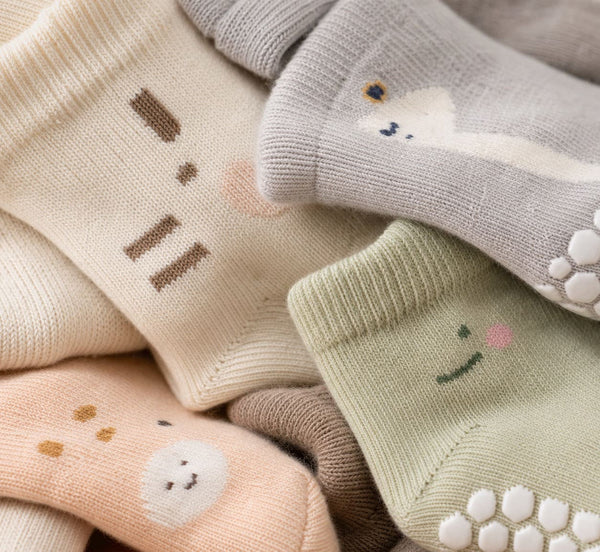
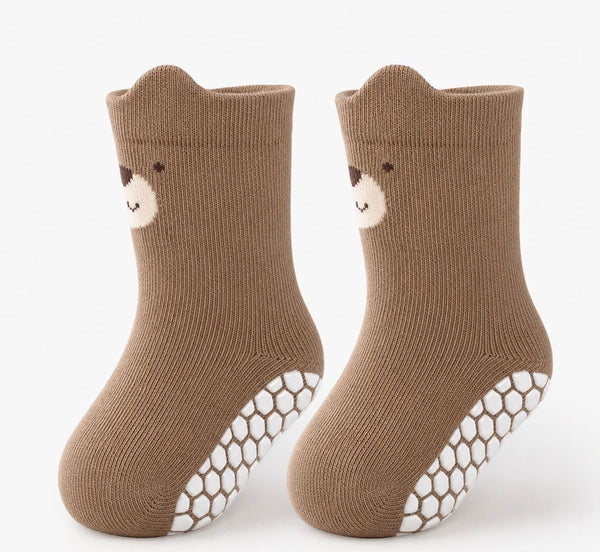
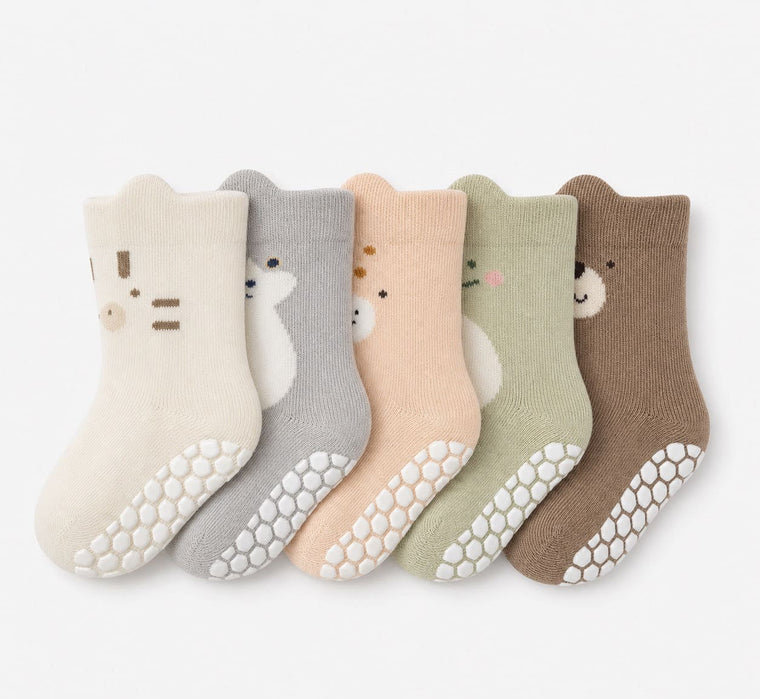
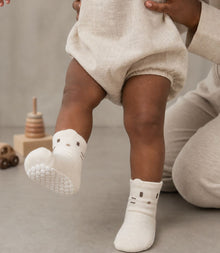
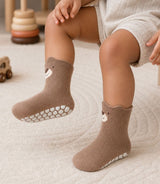
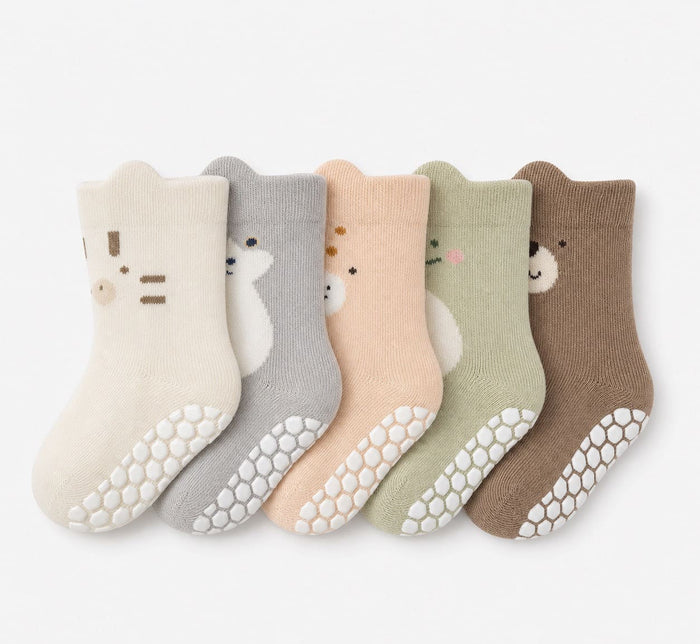
For a baby who is not yet walking at all, a thick pair of grip socks inside a stroller footmuff does most of this job for a fraction of the price. We would rather tell you that than sell you a boot you do not need.
The boot becomes worth it the moment your child starts being put down outside: the yard, the park, the thirty feet or so (10 m) between the car and the front door. That is when a sole earns its place.
Looking after them
Salt and grit are harder on a boot than mud is. Brush them off dry, then a damp cloth, then dry them slowly and away from the heater. The full method is in how to clean baby shoes, and the drying part is the bit that actually matters.
Our winter boots are all lined and flexible, and every pair shows foot length in inches (with centimeters in the size guide) so you can size with the sock on.