

Home› News›Do Babies Actually Need Shoes? A Straight Answer
Do Babies Actually Need Shoes? A Straight Answer
Before walking, no. Once they are walking outdoors, yes. Here is what changes in between, and what a shoe should and should not do.
We sell shoes, so you would expect us to say every baby needs them. We do not think that, and pretending otherwise would be a strange way to start a relationship with you.
Before walking: no, not really
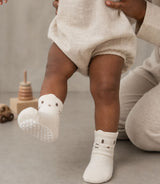
A baby who is not yet walking has no need for a shoe in the structural sense. Nothing needs supporting, nothing needs protecting from the sidewalk. What they do need is warm feet, and a lot of parents find that socks alone come off within four minutes of putting them on.
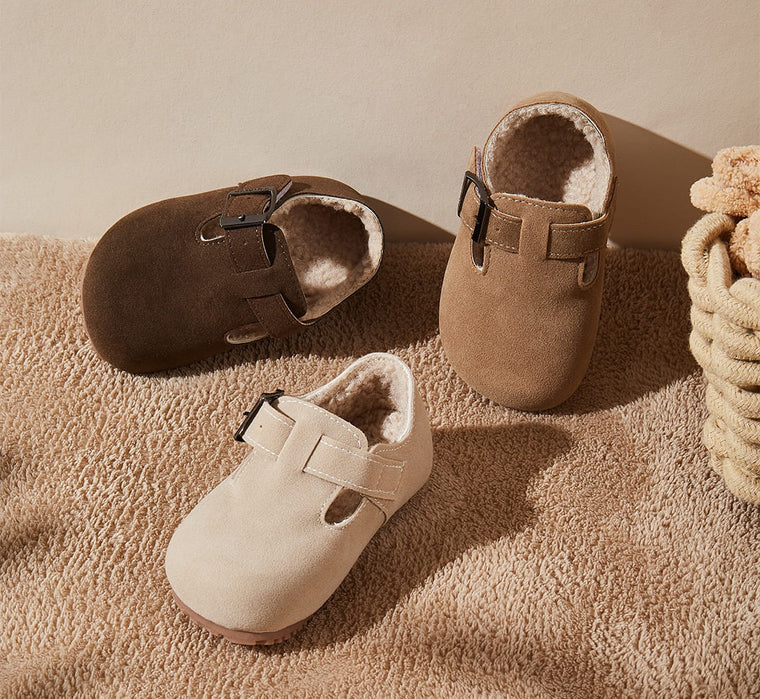
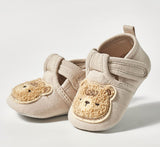
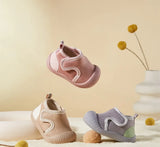
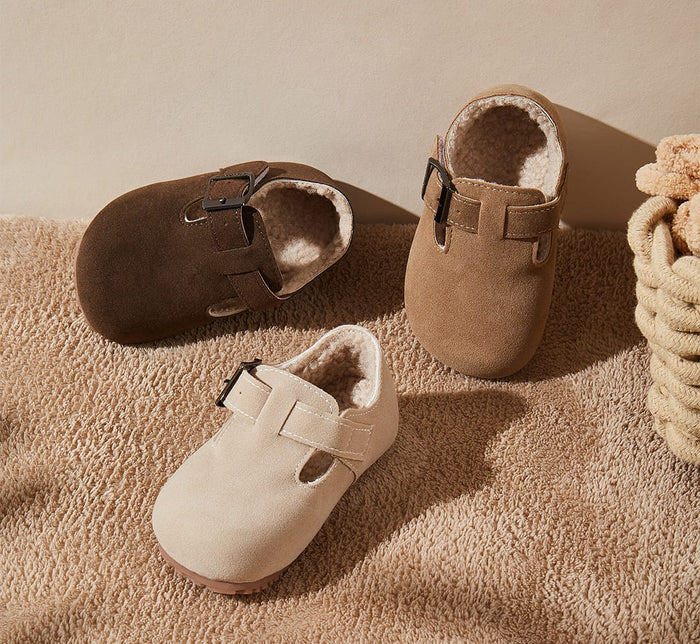
That is the actual job of a pre-walker shoe: stay on, keep the foot warm, and get out of the way. Soft, flexible, elastic at the ankle rather than a strap that gets kicked off. If you can roll it up in your hand, it is doing the right thing.
Learning to walk: bare feet win indoors
This is the part worth knowing. When a baby is learning to walk, the sole of the foot is feeding constant information to the brain about balance, texture and where their weight is. Every layer between the foot and the floor reduces that signal.
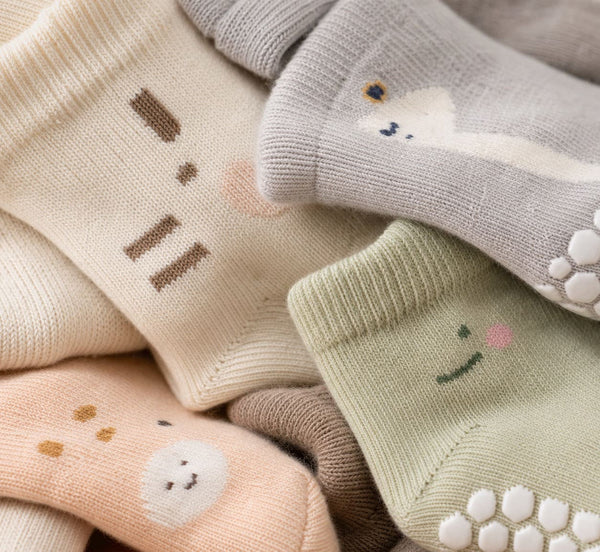
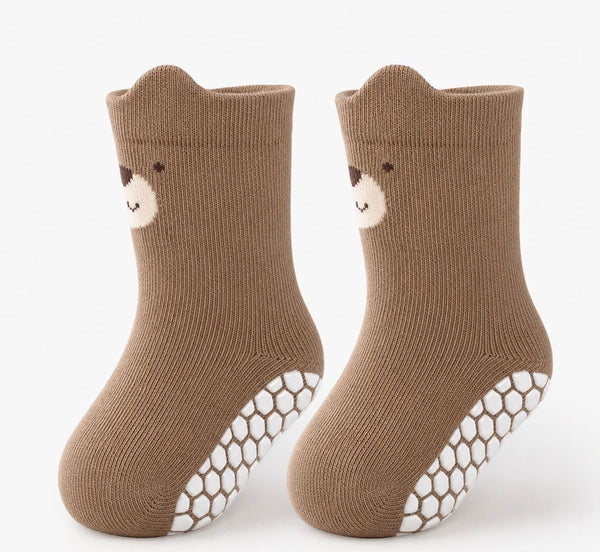
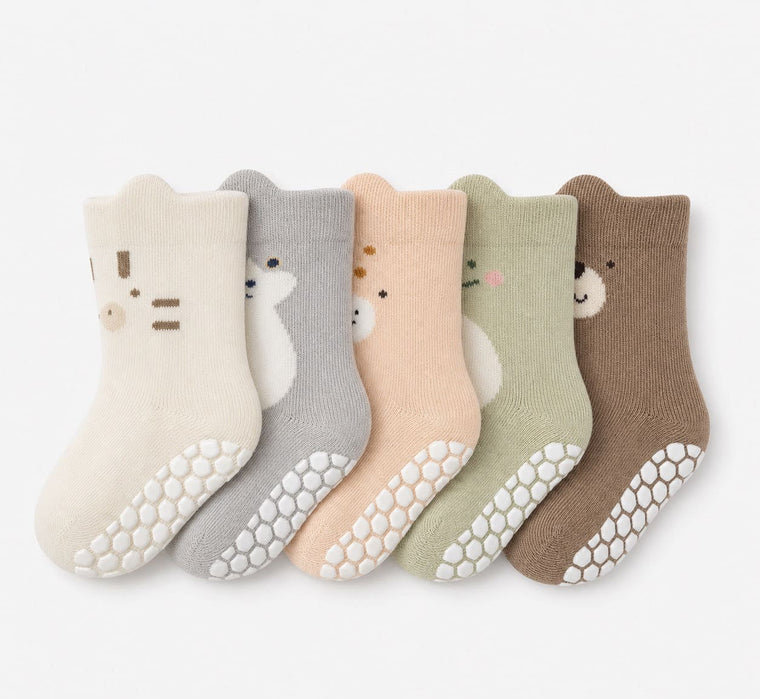
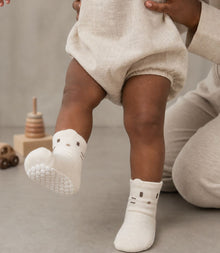
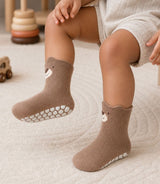
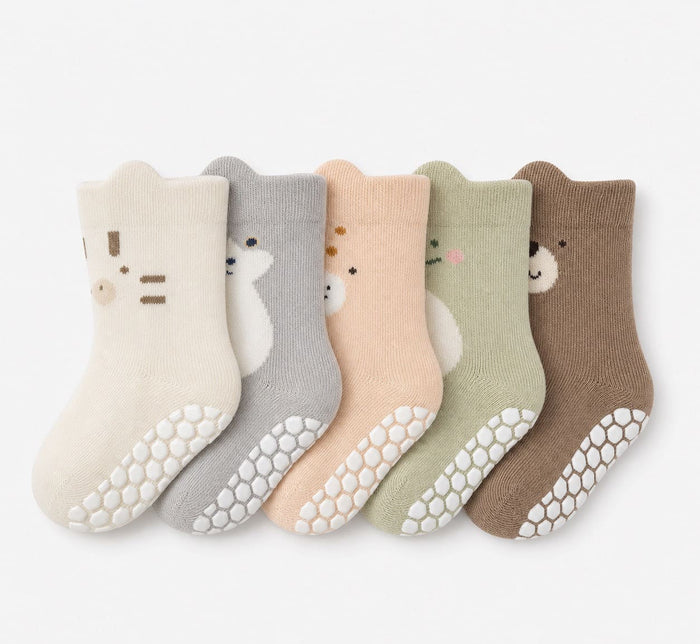
So at home, when it is warm enough, bare is best. When the floor is cold or slippery, a sock shoe or a grip sock gives you traction without adding structure.
Walking outdoors: now you need a shoe
Outside is a different question. Sidewalks are abrasive, temperatures swing, and there is broken glass in the world. A shoe protects. That is its job outdoors, and it is a real one.
What a good first shoe looks like
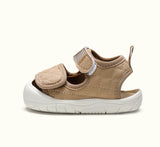
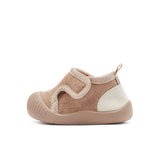
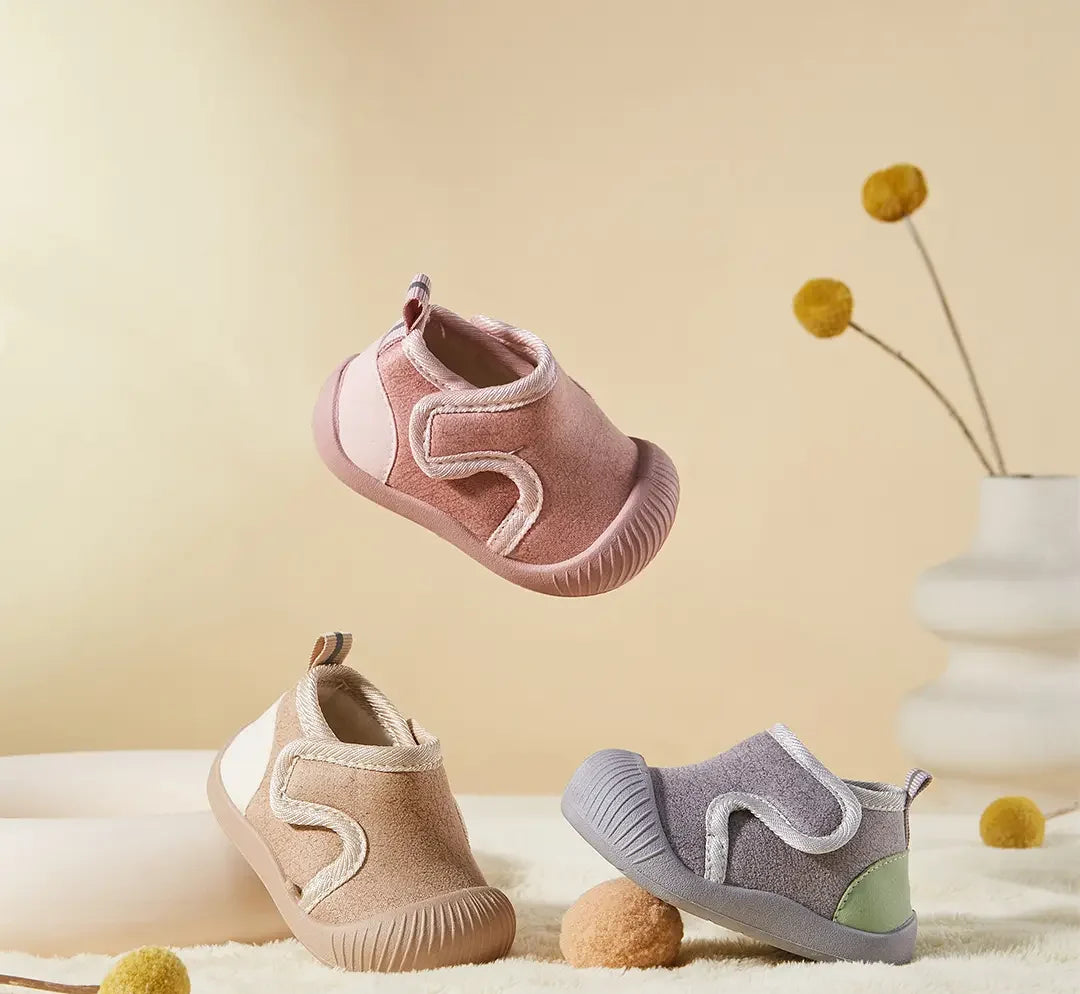
It bends where the foot bends. Hold the shoe and flex it. It should fold at the ball of the foot, roughly a third of the way back from the toe. If it folds in the middle of the arch, it is too soft. If it barely folds at all, it is too stiff.
The toe box is wide. Look at your baby's foot from above. It is a fan, widest across the toes. Most adult shoes are shaped like a triangle pointing the wrong way, and children's shoes often copy that shape for no reason. Toes need room to spread out, because that is how they grip and balance.
It is thin and flat. No raised heel, no thick cushioning. A flat sole keeps the foot in a natural position and lets it feel the ground.
It is light. Lift it. A heavy shoe changes how a new walker moves, and they have little enough control as it is.
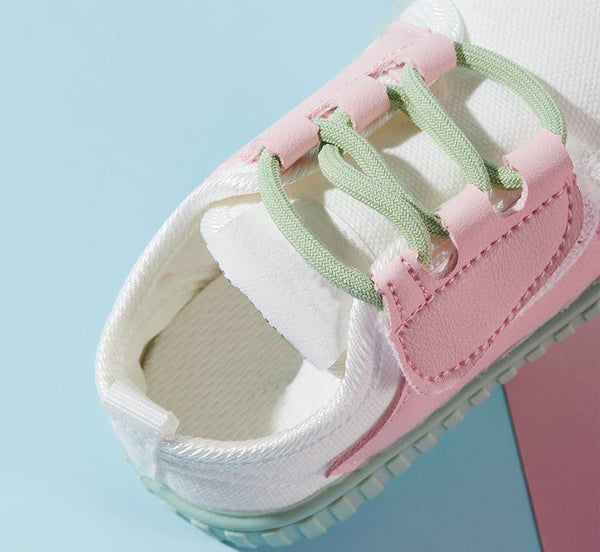
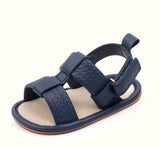
It fastens properly. A shoe that stays on without being gripped by the toes. Hook-and-loop across the top is easier than laces and holds better than a slip-on.
What you do not need
Arch support. Babies are flat-footed. That is not a defect, it is a fat pad plus an arch that has not developed yet. It develops through use, usually between two and six years old. Propping it up early is solving a problem that does not exist.
Ankle support. High-top boots do not strengthen ankles. If anything, they restrict the movement that builds strength.
Orthopedic shoes, unless prescribed. If a doctor has prescribed something for your child, follow that advice over any article on the internet, including this one.
The one thing that matters most
Fit. A well-fitted cheap shoe beats a badly fitted expensive one every single time. Measure the foot, add about 0.4 in (1 cm) of growing room, and check again in two months.
Our size guide covers the measuring in two minutes flat.
General information, not medical advice. Anything specific to your child belongs with your pediatrician.