




Home› News›When Do Babies Start Walking? What's Normal, ...
When Do Babies Start Walking? What's Normal, and What Isn't
Most babies take their first steps somewhere between nine and eighteen months. That is a nine-month window, and every point in it is normal.
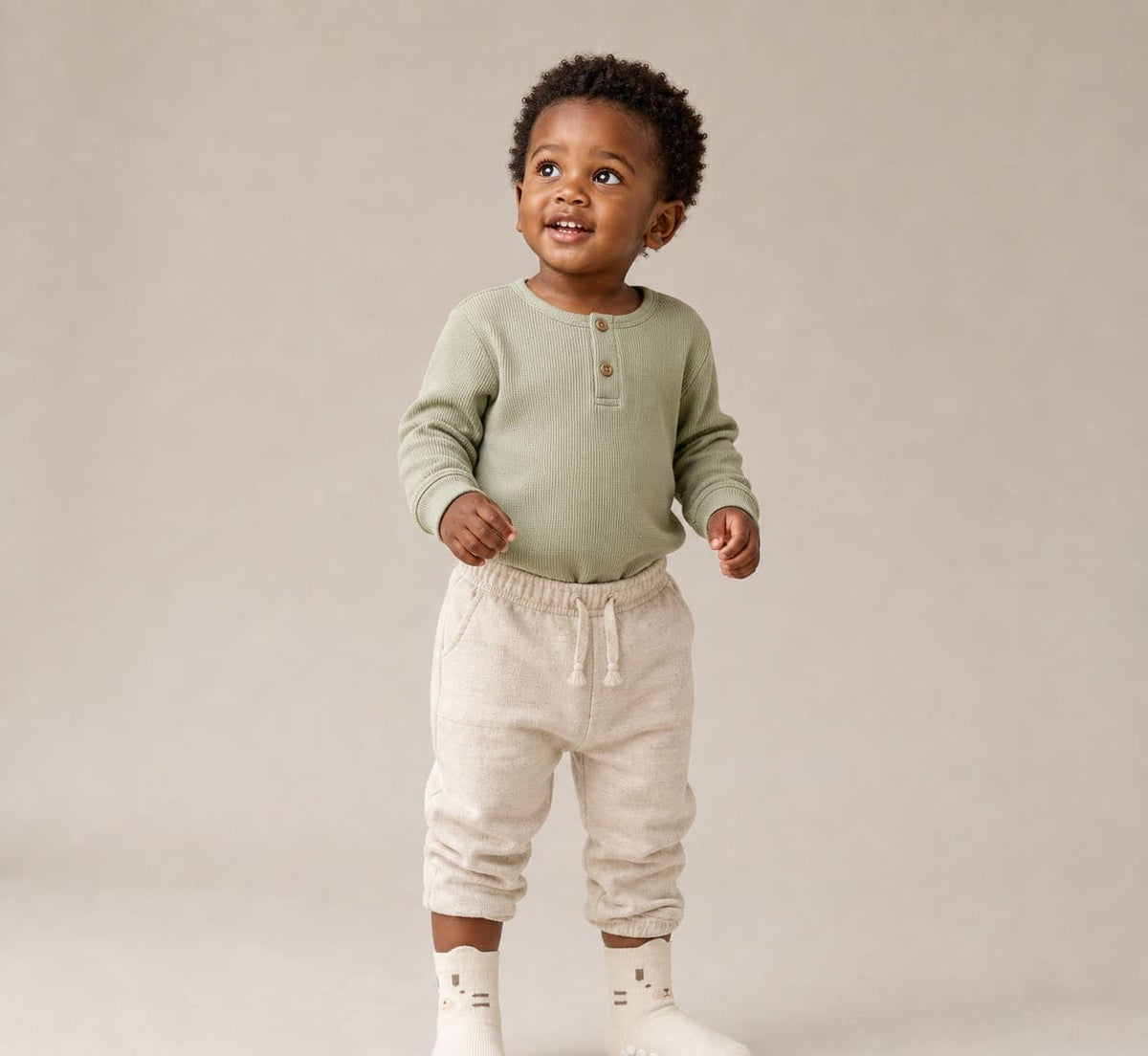
If you have found your way here, there is a good chance you are watching another baby the same age as yours march across a room while yours is still perfectly happy sitting down. It is one of the easiest comparisons to make and one of the least useful.
The window is enormous
Most babies take their first independent steps somewhere between nine and eighteen months. Some walk at eight months. Some are still cruising the furniture at seventeen months and then walk confidently two weeks later. All of that sits inside the normal range.
Walking is not one skill. It is a stack of them: core strength to stay upright, balance to shift weight from one foot to the other, and the confidence to let go of the sofa. Babies build that stack in different orders. A baby who crawled early is not guaranteed to walk early. A baby who never crawled at all may go straight from sitting to walking, and that is fine too.
The stages you will actually see
Pulling up, roughly 8 to 10 months. They haul themselves to standing against the coffee table and then have no idea how to get down. Expect some soft landings.
Cruising, roughly 9 to 12 months. Sideways shuffling along furniture, one hand always in contact. This is where balance really develops.
Standing unaided, roughly 10 to 14 months. A few wobbly seconds in the middle of the room. This one usually surprises everybody, including the baby.
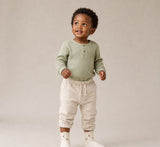
First steps, roughly 9 to 18 months. Two or three lurching steps into your arms, then a sit-down. Within weeks it becomes walking.
These overlap and they are not a checklist. A baby can cruise for months and then skip straight to walking across the room.
What actually helps
Floor time. More time on the floor beats any product. Babies learn balance by falling over safely and getting up again, hundreds of times.
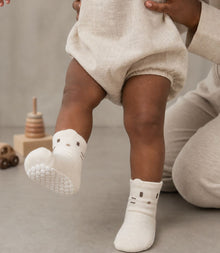
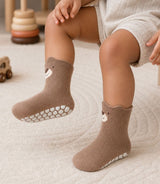
Bare feet indoors. When it is warm enough, let them go barefoot at home. Feeling the floor is how they learn where their weight is. Shoes are for outside, for cold floors, and for protection.
Something to push. A weighted toy or a sturdy chair that slides slowly gives them the confidence to move forward while still holding on.
Space. A clear stretch of floor with something interesting at the far end does more than most walking aids.
What does not help
Baby walkers, the seated kind on wheels, are worth avoiding. They let a baby move quickly without developing balance, they encourage tiptoeing, and they are a genuine safety risk near stairs. Several countries have restricted or banned them for exactly that reason.
Stiff shoes indoors are the other one. A hard sole does the work the foot should be doing.
When to ask someone
Bring it up with your pediatrician if by around 18 months your baby is not taking any independent steps, or at any point if you notice:
- They consistently favor one side, or drag one leg
- They walk on tiptoes constantly and cannot put their heels down
- They lose a skill they previously had
- Something simply feels off to you
That last one matters. You watch this child every day. If your instinct says ask, ask. Most of the time you will be reassured, and that is worth the appointment on its own.
About shoes, while we are here
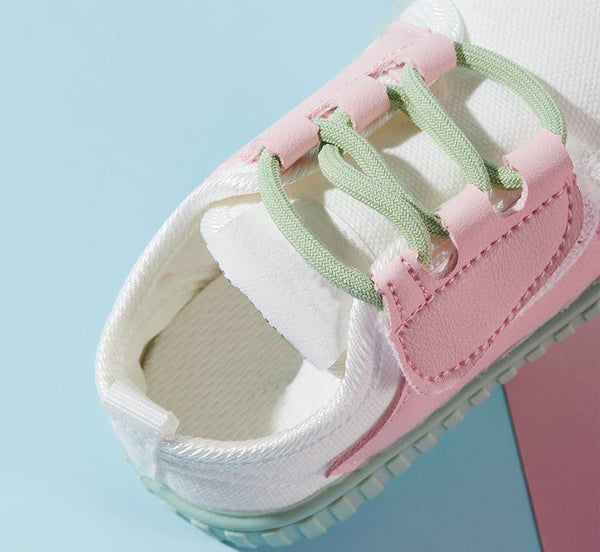
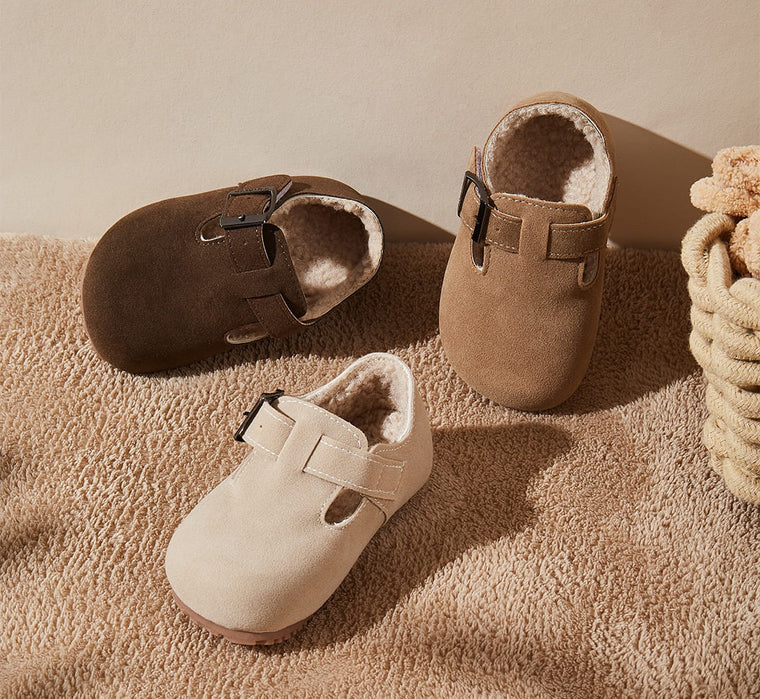
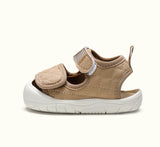
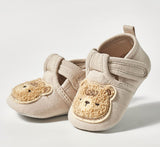
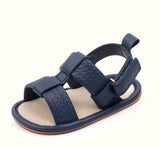
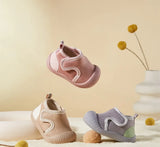
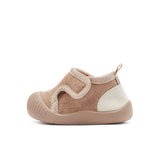
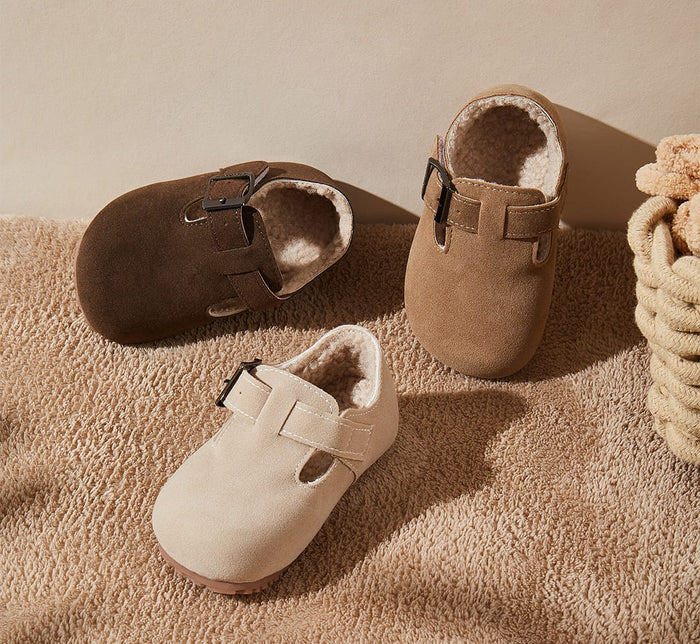
Before walking, shoes have one job: keeping feet warm and staying on. Soft, flexible, nothing rigid. Once they are walking outside, you want a sole that bends where the foot bends, a wide toe box so toes can spread, and enough grip for smooth floors.
What you do not want is support. A healthy baby foot does not need arch support, ankle support or a stiff heel counter. Those feet are meant to be doing the work.
And measure before you buy. Feet at this age can gain a full size in eight weeks, and a shoe that is slightly too small changes how a child walks. Our size guide walks you through measuring at home in about two minutes.
This article is general information, not medical advice. For anything specific to your child, speak to your pediatrician.