

Home› News›Barefoot Shoes for Babies: What the Term Actu...
Barefoot Shoes for Babies: What the Term Actually Means
It is on half the baby shoes sold today and it is not a regulated term. Here is how to check whether a shoe earns it.
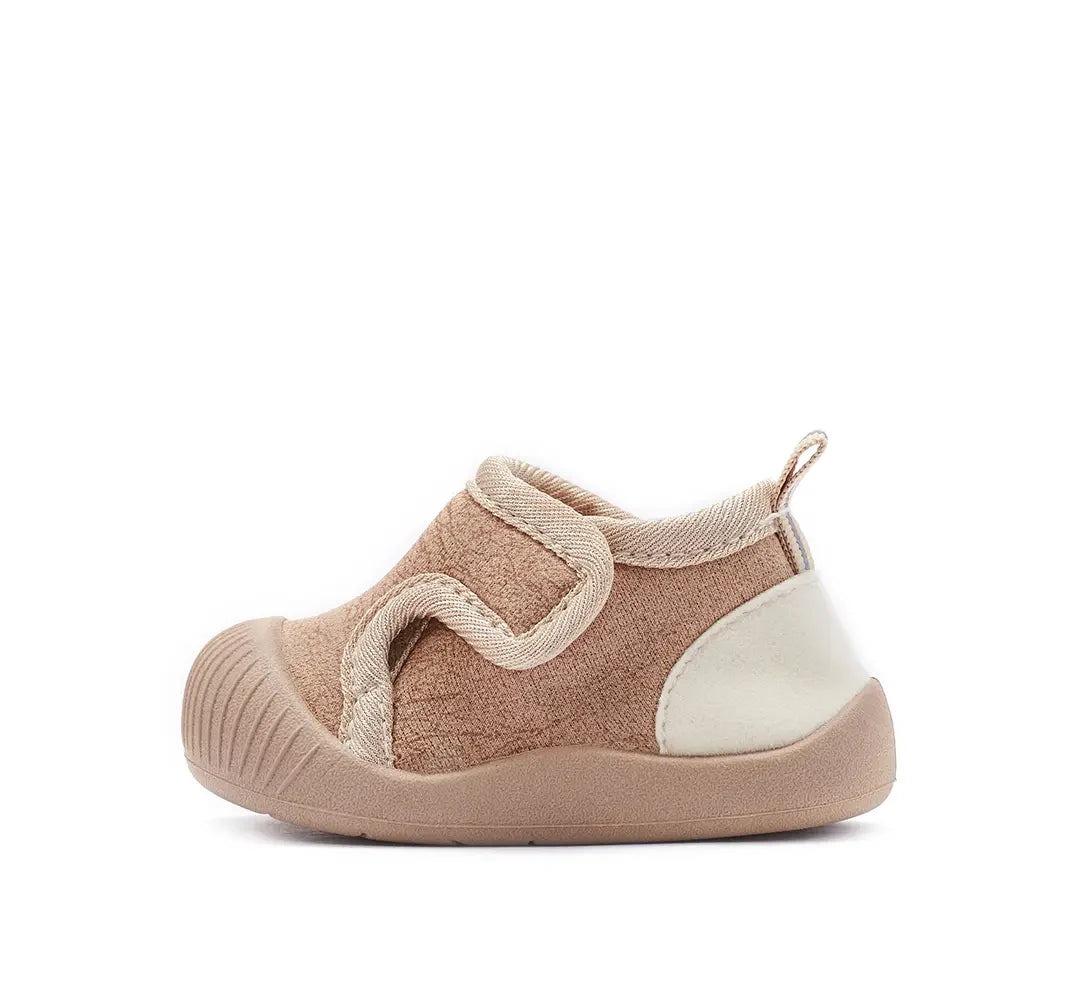
Walk through any baby shoe listing and you will see the word barefoot everywhere. It is not a protected term. Nobody checks it. Which means the only useful thing you can do is learn what it is supposed to describe and test the shoe yourself.
The idea
A barefoot shoe tries to protect the foot while interfering with it as little as possible. It is not a style, it is a set of design constraints, and there are four of them.
The four tests, which take about ten seconds
1. Flexibility. Hold the heel and the toe and bend the shoe. It should fold easily at the ball of the foot and twist along its length. If you have to work at it, it is not flexible enough for a new walker.
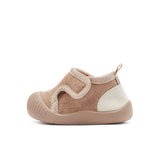
2. Zero drop. Put the shoe on a flat table and look at it from the side. The heel and the toe should sit at the same height. Any lift at the heel tips the body forward and changes how weight travels through the foot. A surprising number of shoes marketed as barefoot have a few millimeters of drop.
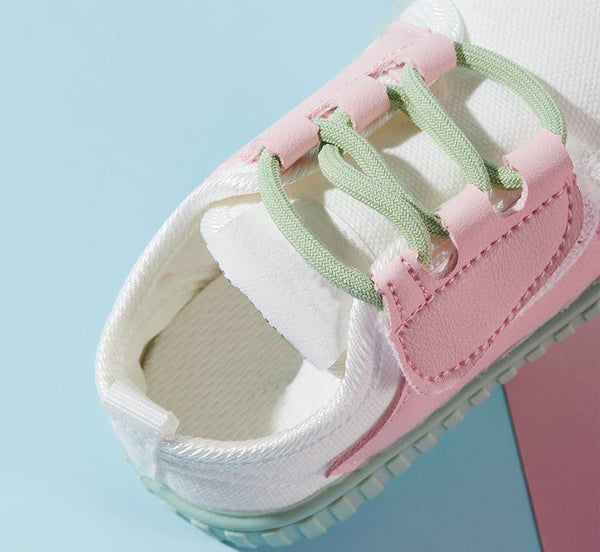
3. A wide toe box. Pull the insole out and stand your child's foot on it. The toes should sit inside the outline without touching the edges, and the widest part of the insole should be at the toes, not behind them. This is the test most shoes fail.
4. Thin sole. Thick enough for sidewalks, thin enough to feel a change in surface underfoot. There is no magic number, but if it feels like a running shoe it is too much.
What it is not
Barefoot does not mean minimal in the sense of flimsy. A good one still has a durable outsole, a proper fastening and materials that survive a washing machine. It also does not mean your child should be in them for every activity forever. Snow needs a boot. Water needs a sandal.
Does it actually matter for babies?
For the first two years, honestly, less than the internet suggests. A baby who is barefoot at home most of the day is already getting the benefit. The shoe matters most for the hours they are outside.
Where it does matter is fit and flexibility, and those two happen to be exactly what the barefoot design principles optimize for. So the label is a decent shortcut, as long as you check it rather than trust it.
The short version
Ignore the word on the box. Bend the shoe, look at it side-on, pull out the insole. Ten seconds tells you more than the product description will.