



Home› News›Getting Shoes On a Child Who Does Not Want Them
Getting Shoes On a Child Who Does Not Want Them
Three minutes before you leave and the foot has disappeared under a cushion. There are only three causes, and two of them are fixable.
You have three minutes before you need to leave. The shoe is in your hand. The foot is somewhere under a sofa cushion, attached to a child who has gone rigid.
Everybody has this. There are only really three causes, and two of them are fixable in an afternoon.
First, rule out the shoe
A child who refuses one specific pair, consistently, is usually right. Before you treat it as behavior, treat it as a fit problem.
Take the shoe off after an hour of wear and look at the foot. Red lines across the widest part mean it is too narrow. A toe pressed flat at the front means it is too short. Both are covered in wide feet, narrow feet, and you can check the length in two minutes with the method in how to measure your baby's feet.
A shoe that is too big causes refusal just as often. If it slides, the toes have to grip to hold it on, which is genuinely unpleasant. That is the same mechanism behind shoes coming off on the way home.
Second, the opening
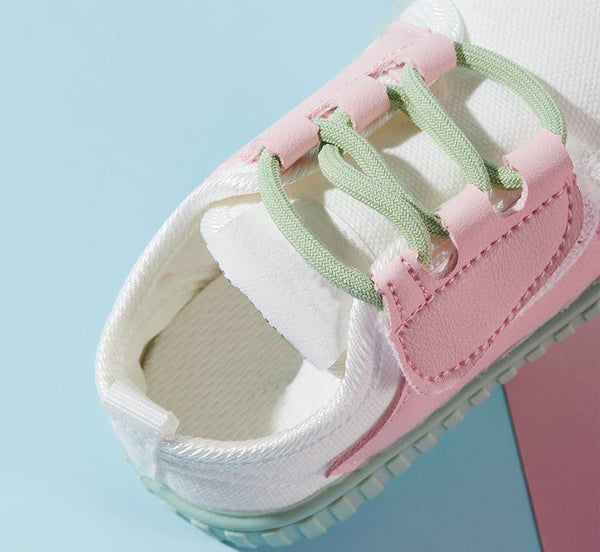
Most of the struggle is the last 0.8 in (2 cm), where the heel has to turn the corner. A wide opening removes almost all of it.
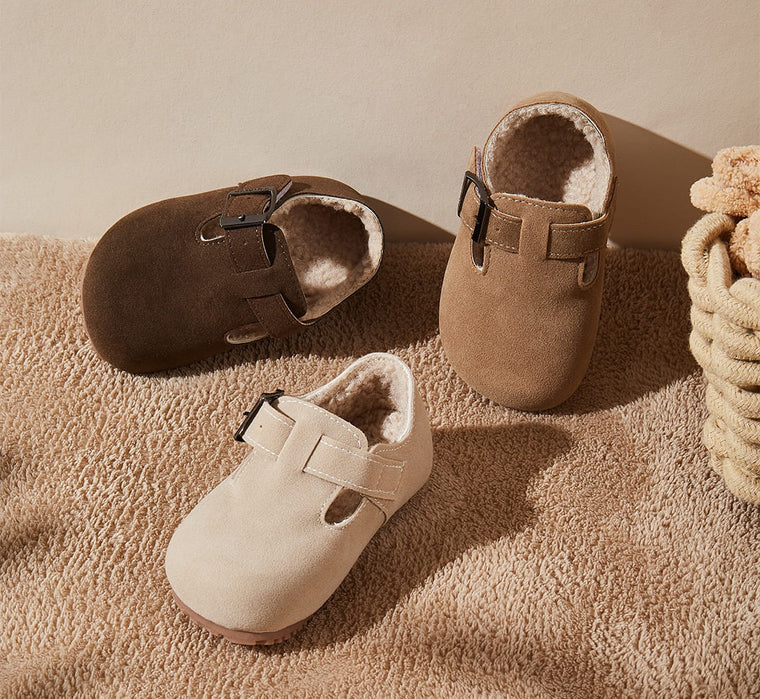
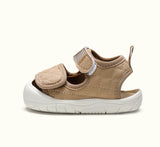
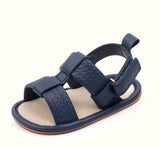
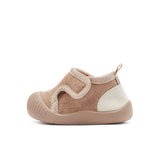
What helps, roughly in order: a shoe that opens fully flat, then a wide elastic cuff, then two straps, then a single strap. A narrow slip-on with a stiff collar is the hardest thing to get onto a child who is not helping, and it is worth simply not owning one.
A thin cotton sock also makes the foot slide in rather than drag. Bare skin on a dry lining grips, which is the last thing you want at this moment.
Third, it is a two year old
Once fit and design are ruled out, what is left is usually a small person exercising the only control available to them. That is normal and it passes, and it responds much better to design than to argument.
Offer a choice of two. Not whether, which. Two pairs, both acceptable to you.
Move it away from the door. Shoes at the door means shoes under time pressure. Shoes on the sofa, ten minutes early, during something else, is a completely different event.
Let them do the last strap. Slow, and worth it. A child who fastened it themselves is far less likely to unfasten it.
Sit them somewhere with their feet up. A lap or the second step of the stairs. On the floor they can push away from you.
Do not narrate the struggle. Attention is the reward. Keep it dull.
The thing not to do
Do not size up so the shoe goes on more easily. It works for about a week and then you have a shoe that slides, toes that curl, and a child who has an even better reason to pull it off.
If it is only ever one foot
Worth a proper look. Feet are rarely the same size, and if you fitted to the smaller one, the larger foot is being squeezed every time. Fit the larger, adjust the strap on the smaller.
And at home, do not bother
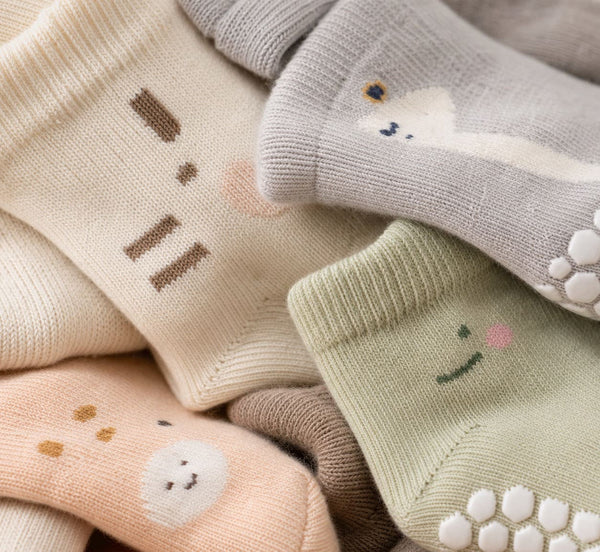
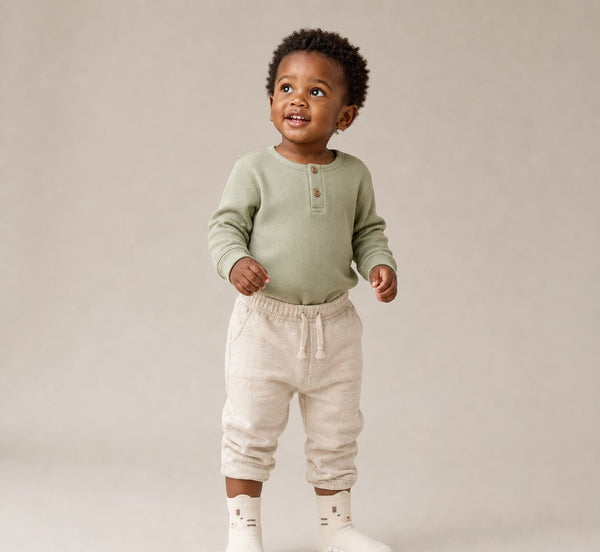
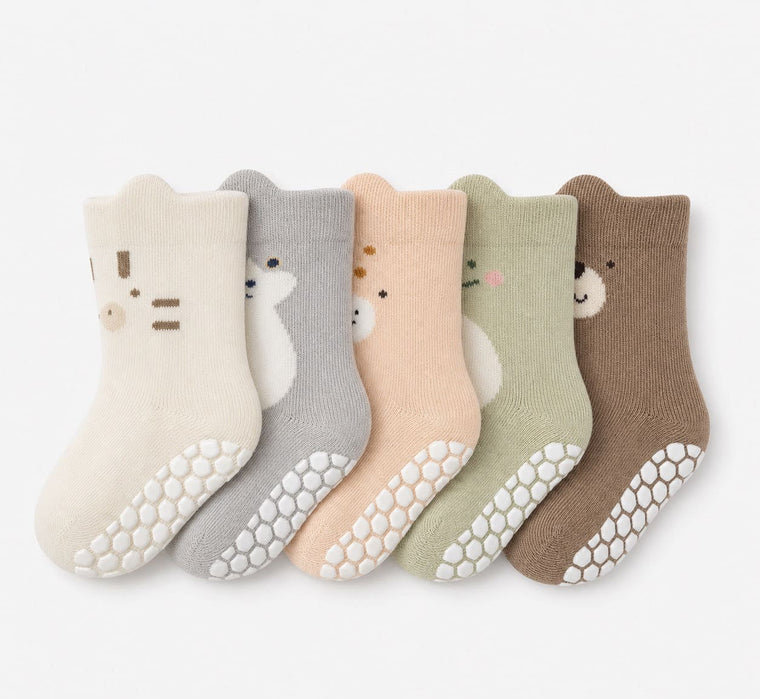
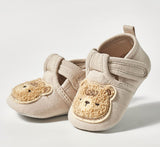
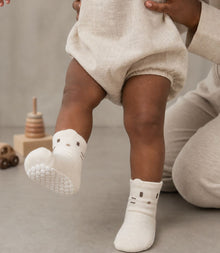
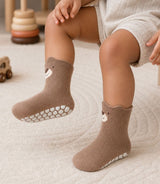
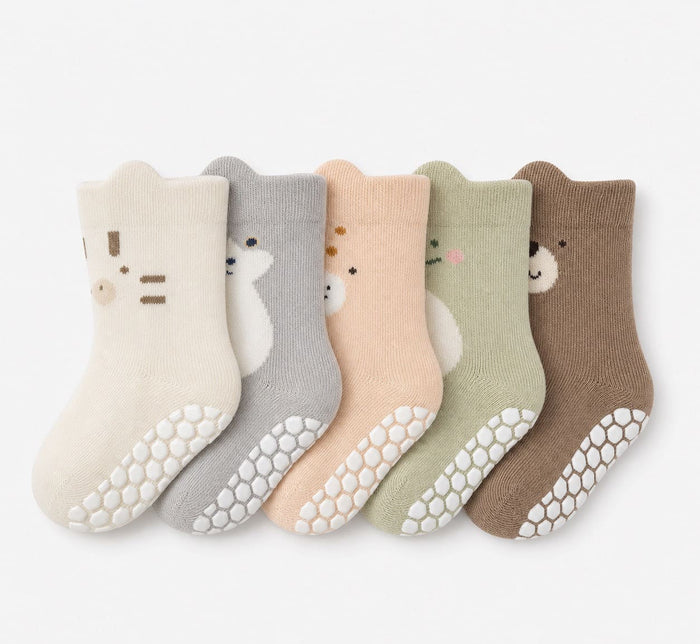
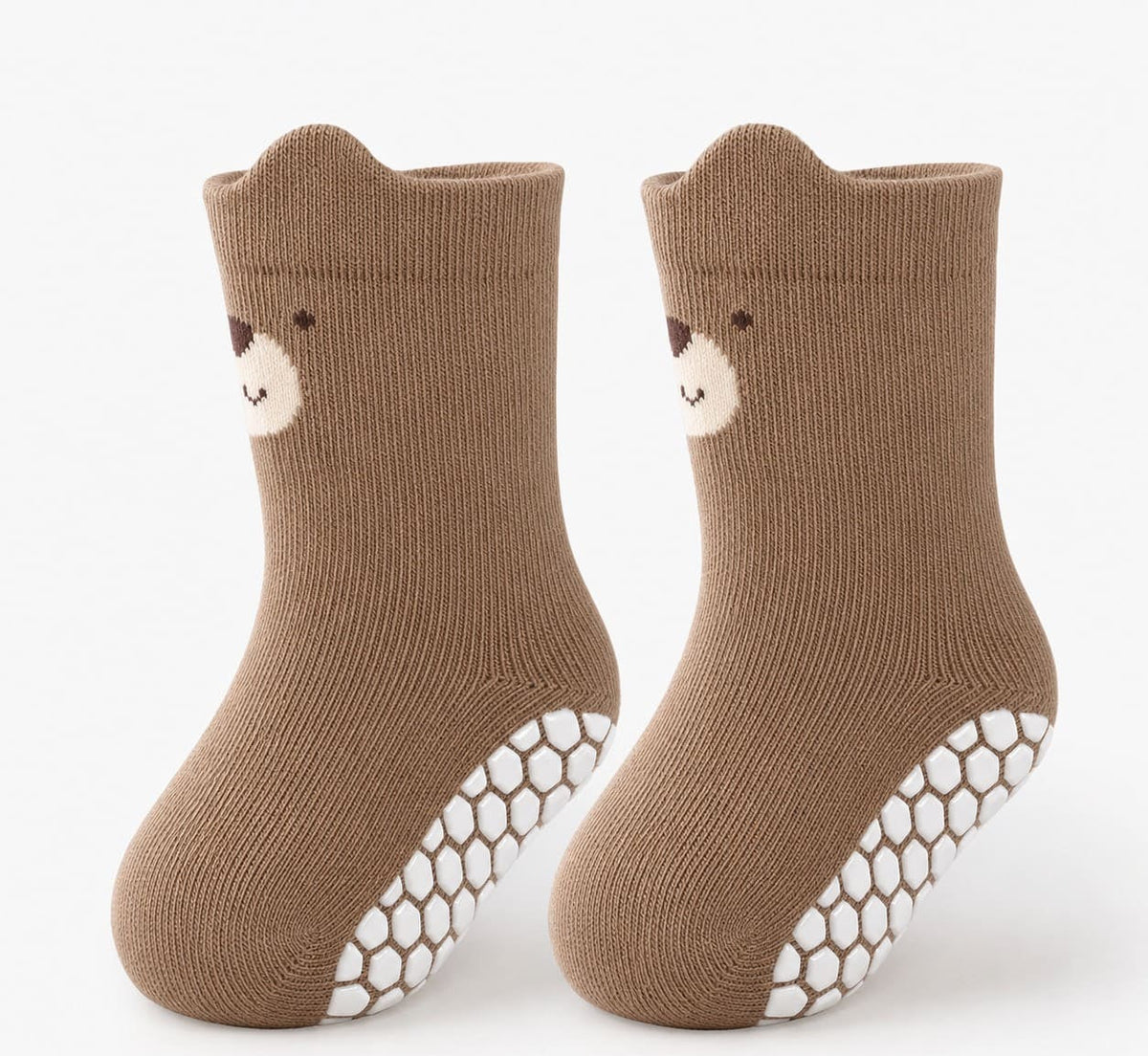
Indoors, on a warm floor, a child who is learning to walk is better off barefoot anyway. On cold or slippery floors a sock shoe or grip sock gives you traction with none of the negotiation, which is most of what sock shoes are for.
Save the shoes for outside. Fewer battles, and the feet are better off.
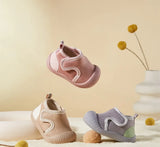
If you suspect the fit is the real problem, our size guide takes two minutes, and first walkers all open wide enough to get a foot in without a fight.