


Home› News›Wide Feet, Narrow Feet, and Why Length Is Onl...
Wide Feet, Narrow Feet, and Why Length Is Only Half the Answer
You measured properly and the shoe still does not work. Width is the other half, and almost nobody talks about it.
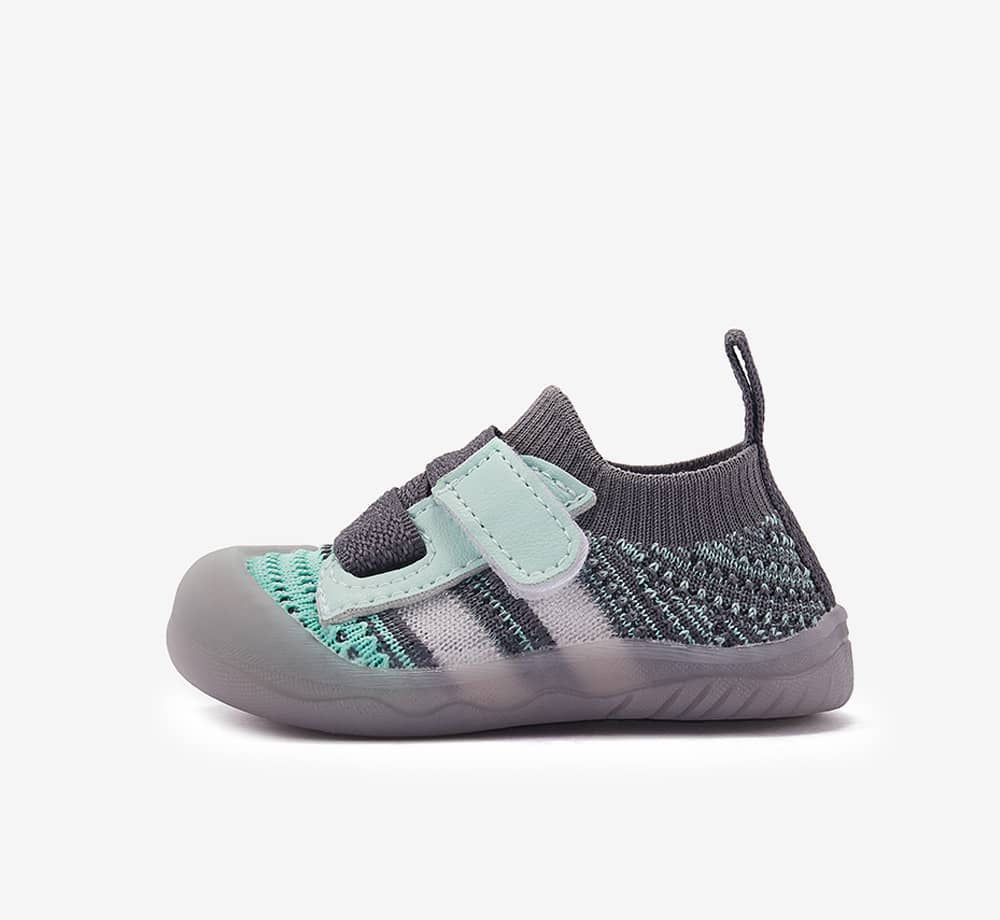
You measured properly. You bought the right length. The shoe still does not work: it gapes at the sides, or your child pulls it off within the hour, or there is a red line across the widest part of the foot at bath time.
Length was never the whole answer. Width is the other half, and almost nobody talks about it.
Baby feet are wide, and that is normal
A baby foot is shaped like a fan. It is at its widest across the toes, not behind them, and it is padded with fat that has not gone anywhere yet. Adult shoes are shaped like a triangle pointing forward, and a great many children's shoes copy that shape for no reason other than habit.
So the first thing worth saying is that a wide foot is not a problem to be solved. It is a foot. The problem is a shoe built as though toes taper.
The insole test
This is the fastest check there is, and it takes ten seconds.
Pull the insole out of the shoe and stand your child's foot on top of it, weight on. Now look:
- Toes inside the outline with a little air around them. That is a fit.
- Toes touching or hanging over the sides. Too narrow, whatever the length says.
- A visible gap all the way around. Too wide, and the foot will slide.
- The widest point of the insole sitting behind the toes. Wrong shape entirely. Put it back.
If the insole does not come out, the same test works on a shoe you can see into, but it is less honest. Insoles come out of most decent baby shoes, and it is a reasonable thing to expect.
Signs the shoe is too narrow
Red marks across the widest part of the foot after an hour of wear. Toes that curl slightly when standing. A strap that has to be let out to the last hole to close. An upper that strains and creases sideways instead of bending forward across the ball.
Skin tells you the truth here, so take a shoe off after an hour and look. That habit is also the fastest way to catch a shoe that has been outgrown, which is covered in how to measure your baby's feet.
Signs it is too wide
The heel lifts when your child walks. The foot slides forward on a downhill, so the toes hit the front. Your child curls their toes to hold the shoe on, which you can sometimes feel through the upper.
Too wide is more common than people think, because a shoe that gapes is often a shoe that was sized up for longevity. That is also the main reason shoes come off on the way home.
What to do about it
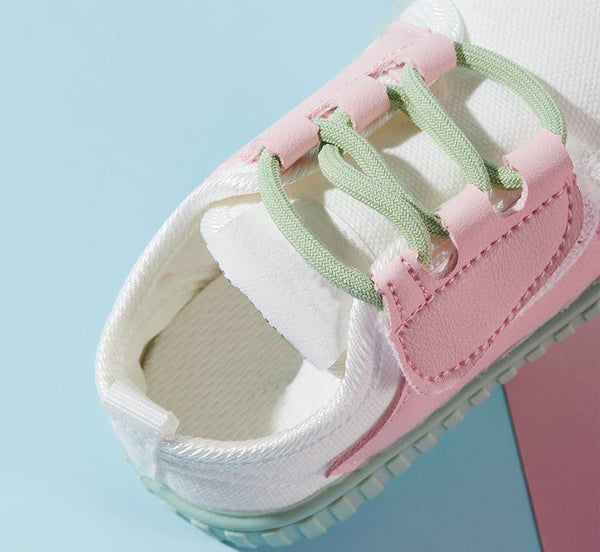
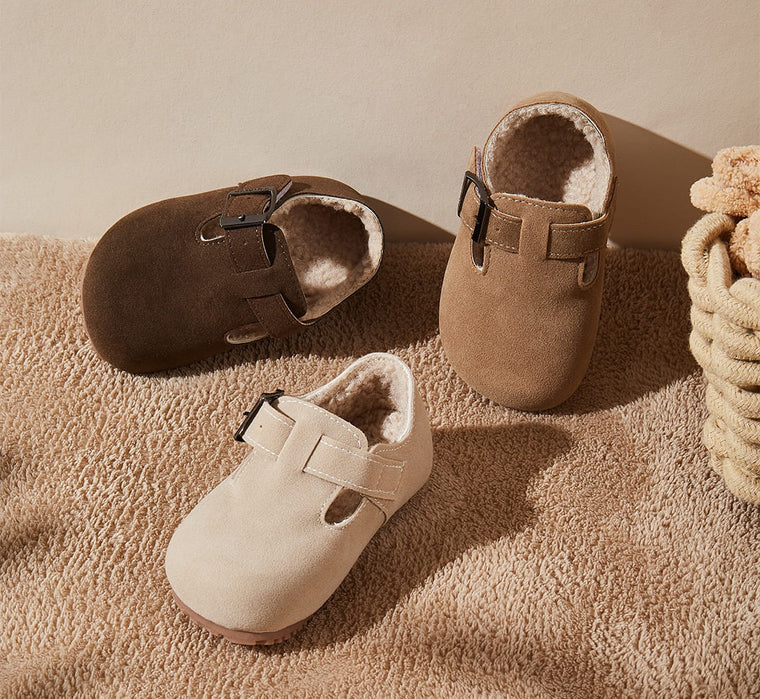
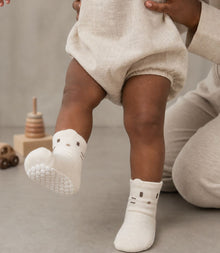
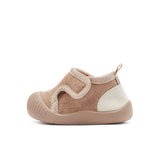
If the foot is wide, look for a rounded, roomy toe box and two adjustment points rather than one. A strap across the instep plus something at the ankle lets you tighten where the foot is narrow and leave room where it is not. Our soft sole shoes and sock shoes are the most forgiving here, because a stretch upper adapts to a shape rather than dictating it.
If the foot is narrow, a thin cotton sock and a properly tightened strap solve most of it. Do not size down on length to compensate. You will trade one bad fit for a worse one.
If the two feet are different, which is the normal state of affairs, fit the larger one and adjust the strap on the smaller.
One thing not to buy
Arch support. A baby foot is flat because of a fat pad and an arch that has not developed yet, and it develops through use. Propping it up early solves a problem that does not exist. There is more on that, and on how to test a shoe in a store, in what barefoot shoes actually means.
Measure the length, check the width, then buy. Our size guide covers the first part in two minutes.