

Home› News›What Sock Shoes Are Actually For
What Sock Shoes Are Actually For
Half sock, half shoe, and the most misunderstood thing in a baby shoe drawer. The stage they suit, and the two places you should not use them.
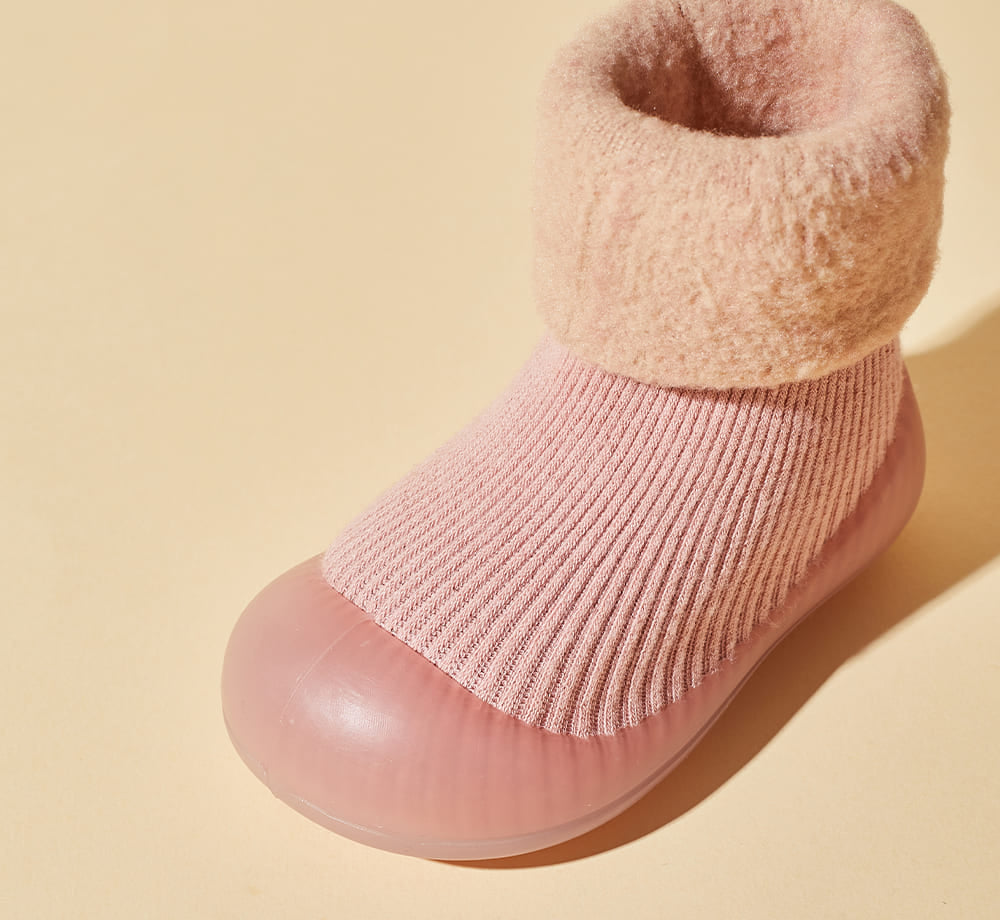
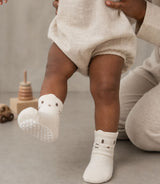
Sock shoes sit in an odd gap. They are too soft to be a shoe and too grippy to be a sock, so they end up in the basket without anyone being quite sure what they are for. They have a job, and it is a narrow one.
What they are
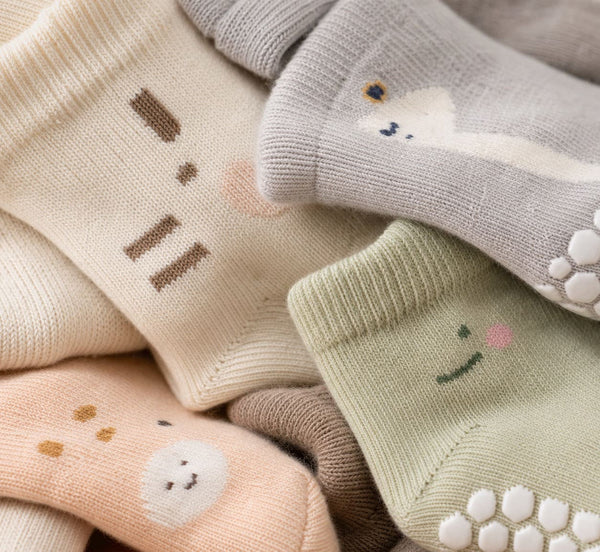
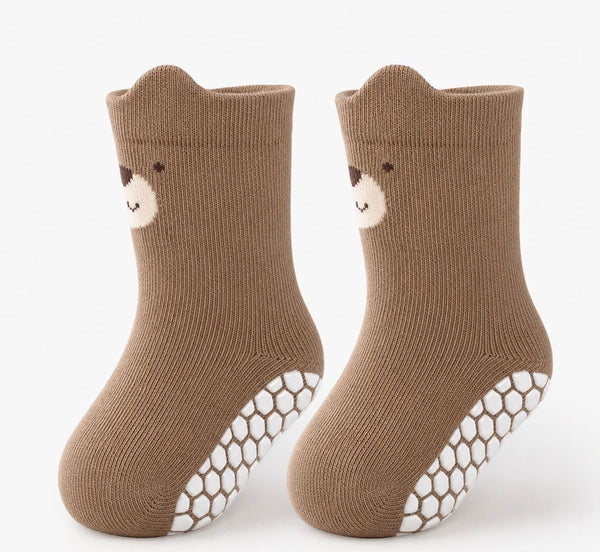
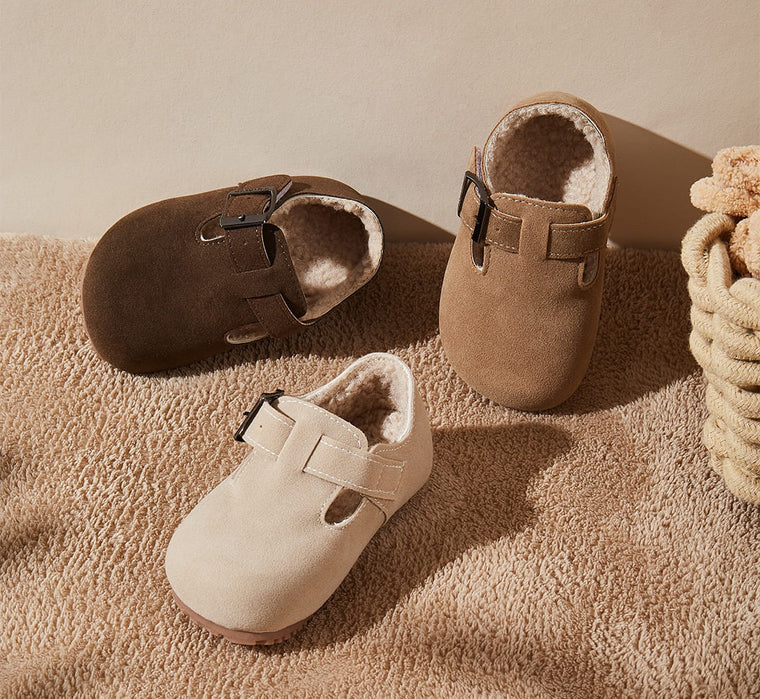
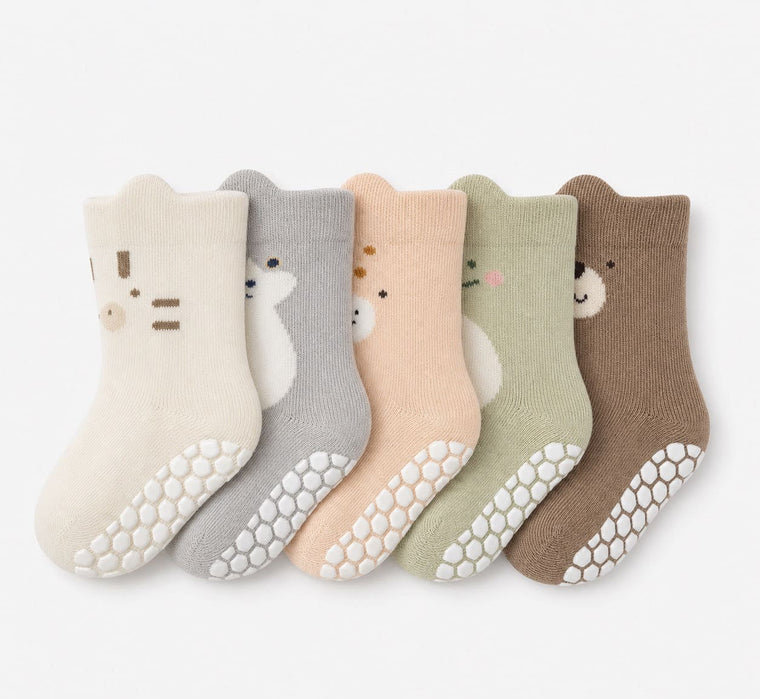
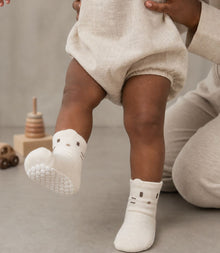
A knitted or stretch upper joined to a thin rubber sole. The upper behaves like a sock: it stretches on, hugs the ankle and has no strap to kick off. The sole behaves like a shoe: it grips a wooden floor and takes the sting out of a dropped brick.
There is no arch, no heel counter and almost no structure. That is not a shortcut. It is the point.
The stage they suit
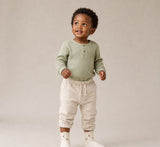
Roughly from the moment a baby starts pulling up on furniture to a few months after they walk confidently. That is the stretch where the foot is doing the most learning and the least protecting.
A baby who is cruising along the sofa is reading the floor through the sole of their foot. Every millimeter of padding between the two makes that signal quieter. A sock shoe keeps the signal and adds grip, which on a laminate floor in December is the entire reason it exists.
Where they work
- Indoors on hard floors. The main one. Grip without structure.
- Daycare and indoor play areas. Most will not allow bare feet, and a sock shoe is the closest allowed thing to it.
- Grandparents' houses with cold tiles. Warmth and traction, no fight to get them on.
- In the stroller. Nothing to kick off and lose down a drain.
Where they do not
Outdoors, on the sidewalk, for any real distance. The sole is thin by design and sidewalks are abrasive by nature. They will wear through, and before they do they will not protect a foot from a stone.
They are also not a rain option. A knitted upper takes on water and stays wet for hours.
How they should fit
Snugger than a shoe, looser than a sock. The heel should not lift when you pull gently, and the toes should not press against the front when your child is standing.
Because the upper stretches, it is easy to convince yourself that a small one still fits. Take one off after an hour and look at the foot. Red lines across the toes mean it is done, whatever the label says, and the same check catches a shoe that is simply too narrow.
Sock shoes are usually sold in month ranges rather than by foot length, which is less precise than we would like. If your child is between two ranges, take the larger one.
Washing them
Cold, gentle cycle, in a mesh bag so the soles do not batter the drum. Air dry, away from a heater or vent. Heat is what shrinks the knit and lifts the sole away from the upper, and once that bond goes there is no fixing it. The full method is in how to clean baby shoes.
When to move on
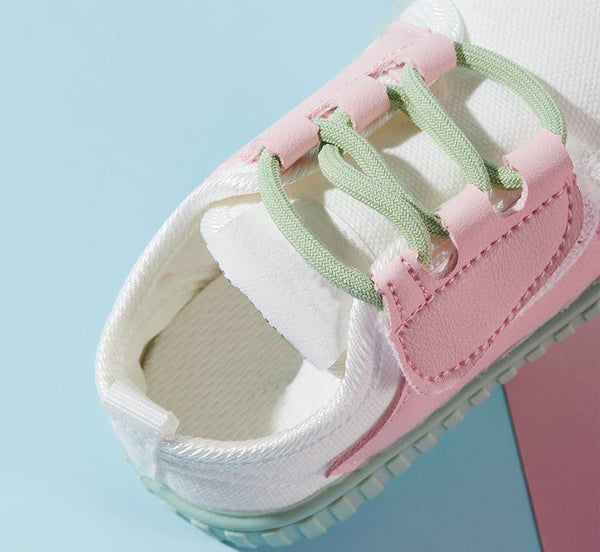
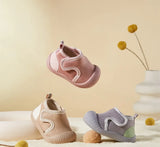
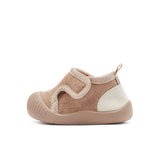
Once your child is walking outside every day, a sock shoe stops being enough. You want a proper outsole, a wide toe box and a fastening that holds. The habit worth keeping is the softness: whatever comes next should still bend where the foot bends.
Two signs it is time. The sole is smooth where it used to be textured, or the grip pattern is worn flat under the ball of the foot.
When that happens, our first walkers are the next step, and the size guide will tell you where to start.