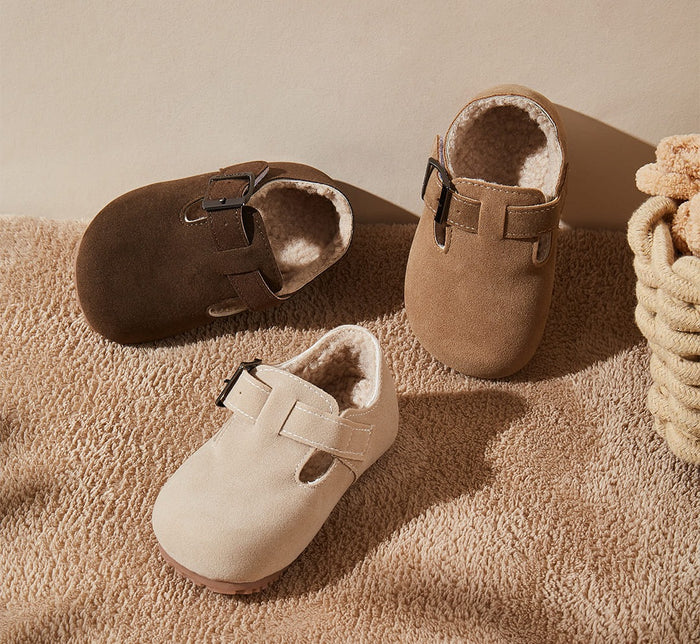


Home› News›Socks Under Baby Shoes: Thick, Thin or None a...
Socks Under Baby Shoes: Thick, Thin or None at All
The shoe that fit in July suddenly does not, and the sock is why. Which sock goes with which shoe, why you measure with it on, and the one place a grip sock does not belong.
September is the month the socks go back on. The sandals were worn barefoot all summer, the shoe that fit in July suddenly does not, and nobody can work out why. The sock is why. A thin cotton sock takes up about a tenth of an inch. A winter sock takes up more than that, and a growing foot was already using up the room.
Measure with the sock you will actually use
Every size chart assumes a foot. It does not assume a foot in a thick sock. So if you measured barefoot in June and buy a fall shoe to that number, the shoe is a half size small the first time you put a sock in it.
The fix is simple: measure with the sock on. Stand your child on the paper, heel to the wall, wearing the sock they will wear with that shoe. Then add the usual 0.4 in (1 cm) of growing room. The full method is in how to measure your baby's feet, and the chart in our size guide shows foot length and insole length side by side so you can see exactly how much room the sock is using.
Thin socks: the everyday answer
A thin cotton or bamboo sock does three useful things. It stops the foot sliding inside the shoe, which is most of what keeps a shoe on. It absorbs sweat, and small feet sweat a great deal. And it stops a seam or a strap rubbing on bare skin.
It costs almost no room. If a shoe fits barefoot with proper growing room, it will fit with a thin sock.
Thick socks: only with a shoe sized for them
A chunky knit sock in a shoe that was fitted barefoot pushes the toes against the front and the foot over the edge of the insole. The child curls their toes to cope, which is exactly the thing a well-fitted shoe is supposed to prevent. It is also one of the reasons a shoe comes home without its partner, covered in why baby shoes come off.
Thick socks belong in a winter boot that was sized with the sock on. For a baby who is not yet walking, a thick sock inside a stroller footmuff does most of the winter job on its own, which is the point made in winter boots for a baby who cannot walk yet.
No socks: fine, in the right shoe
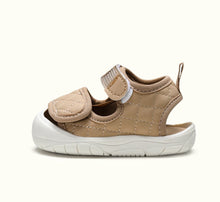
Barefoot inside a shoe is fine in a sandal or a breathable summer shoe, and we said so in sandals or bare feet. In a closed fall shoe it is a worse idea. The foot sweats into the lining, the lining stays damp, and a damp lining rubs. Check the heel and the top of the toes at bath time. A red patch there is a rubbing patch.
Grip socks are not a shoe
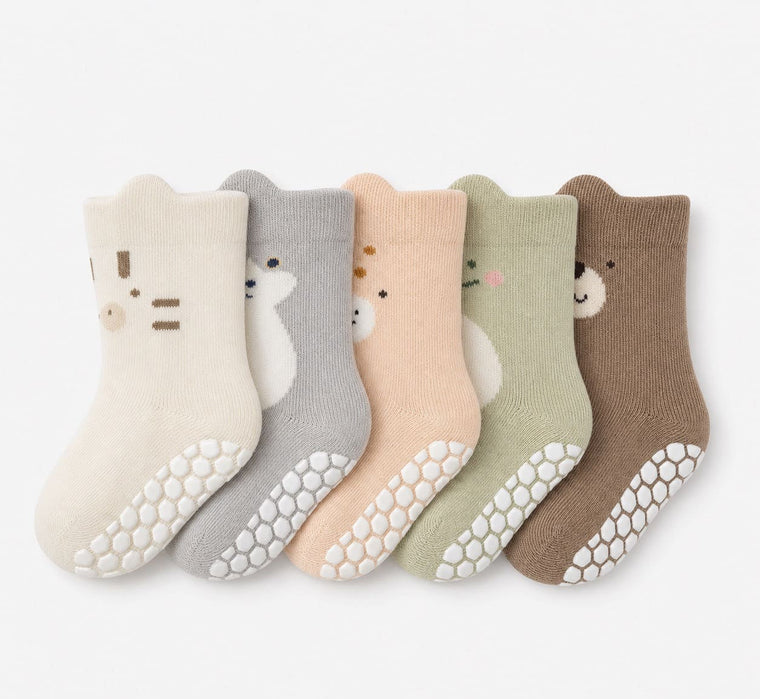
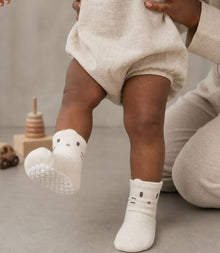
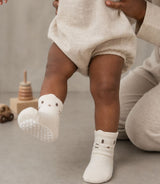
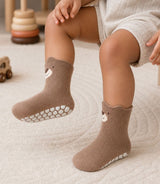
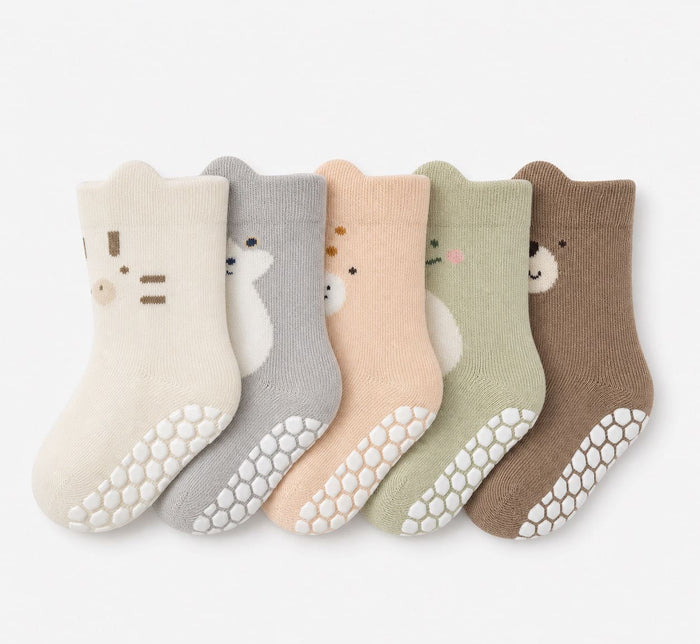
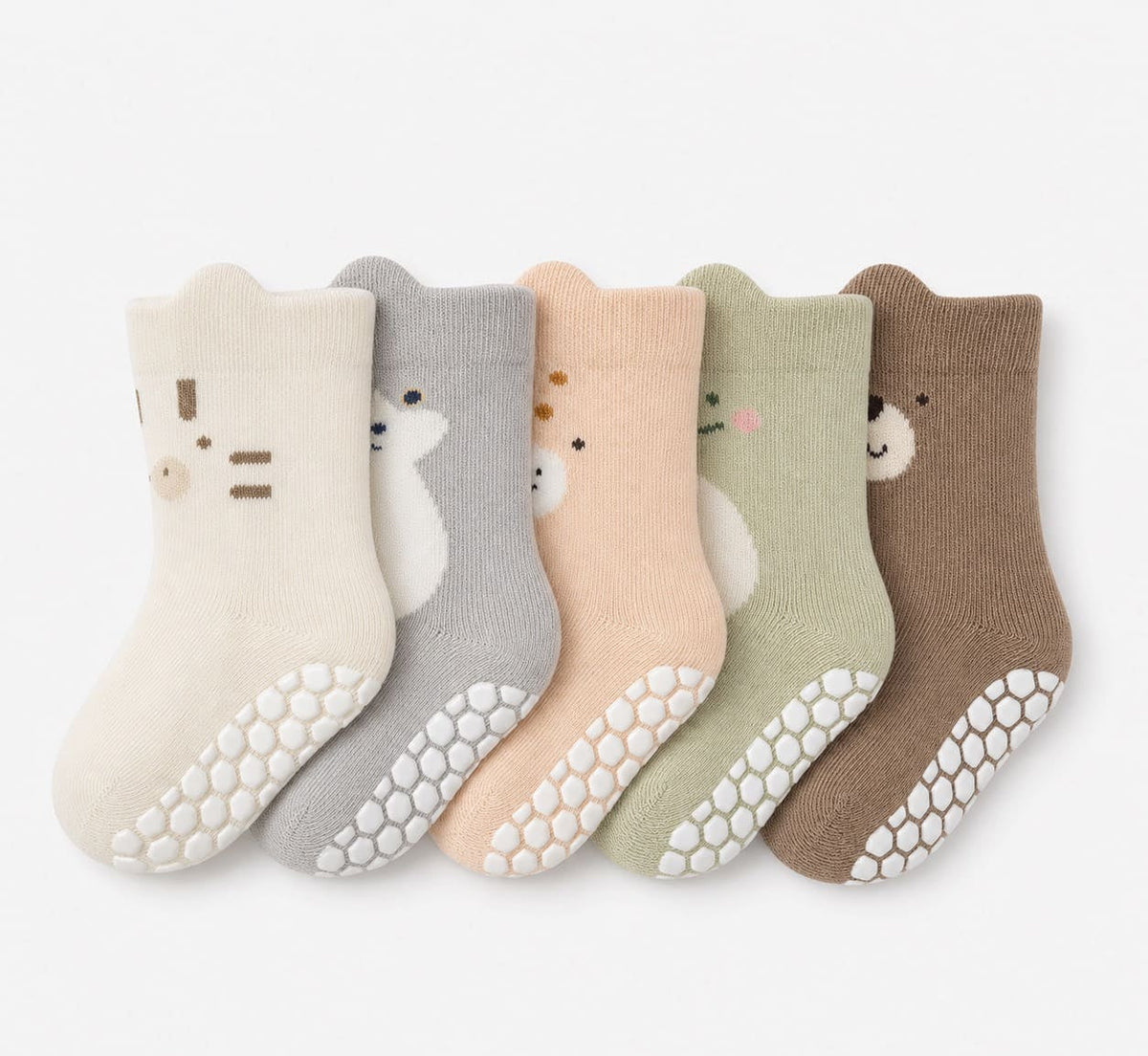
A grip sock with rubber dots on the sole is a brilliant thing on a laminate floor and a poor thing on a sidewalk. Indoors it gives traction without structure, which is exactly what a new walker wants. Outdoors it wears through in a week and protects nothing. If you want indoor grip with a bit more sole, that is what sock shoes are for.
Socks have a size too
A sock that is too small does the same thing a shoe that is too small does: it pulls the toes down and holds them there. Sock sizes are vague, usually given in months, so check the easy way. Take the sock off after an hour and look for a ridge across the top of the toes. If it is there, the sock is done.
The short version
- Measure with the sock your child will wear with that shoe, then add 0.4 in (1 cm).
- Thin sock in a shoe. Thick sock only in a boot sized for it.
- Barefoot in a closed shoe rubs. Barefoot in a sandal is fine.
- Grip socks indoors, never for the sidewalk.
Our grip socks are the thin kind, and every shoe on the site lists foot length in inches so you can size with the sock on rather than guess.