

Home› News›Does a Baby Need Slippers Indoors?
Does a Baby Need Slippers Indoors?
On carpet in a warm house, no. On cold tile from October to March, yes, but not the fluffy sock and not the miniature shoe. The one kind worth buying, and how it differs from a sock shoe.
The heat comes on, the floors stay cold, and somebody buys the baby a pair of slippers. Whether that was a good idea depends entirely on what is in the box. Most of what is sold as a baby slipper is either a sock with a fluffy outside or a small stiff shoe with a fluffy inside, and neither of those is what you want.
What a slipper is for
One job: warm feet indoors on a cold floor. Not support, not protection, not grip on a sidewalk. If your floors are carpet and your house is warm, a baby does not need slippers at all. Bare feet are better for a child who is learning to walk, for reasons we went through in do babies actually need shoes.
Slippers earn their place on tile, stone, laminate and sealed wood, in a house where the floor is noticeably colder than the room. That describes a lot of houses from October to March.
The three kinds, and which one to buy
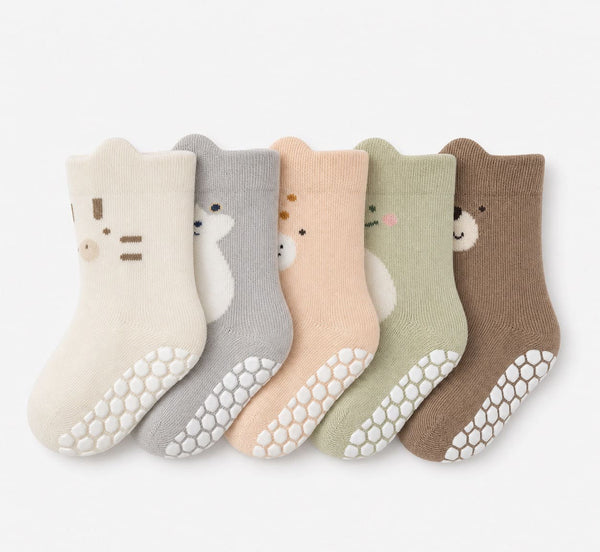
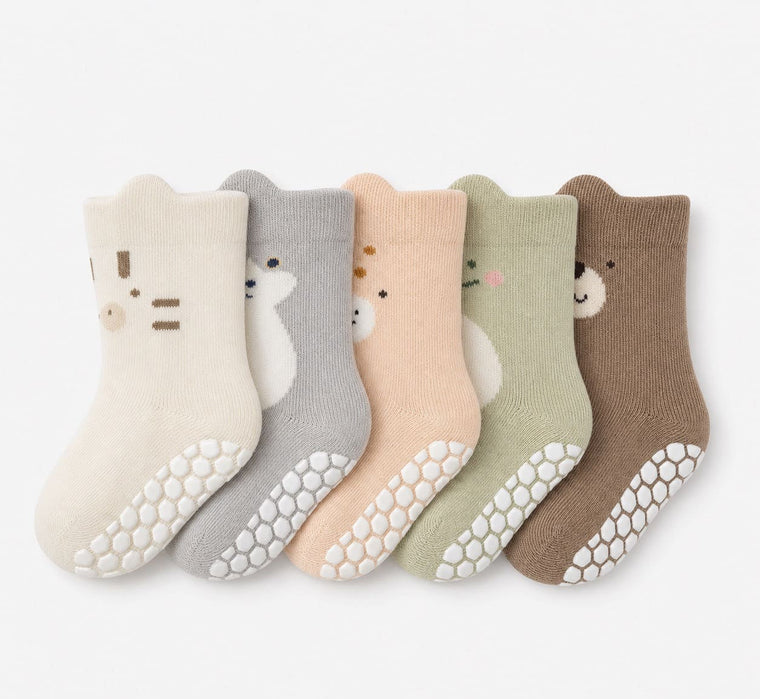
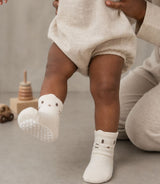
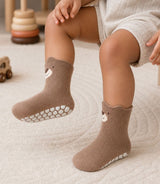
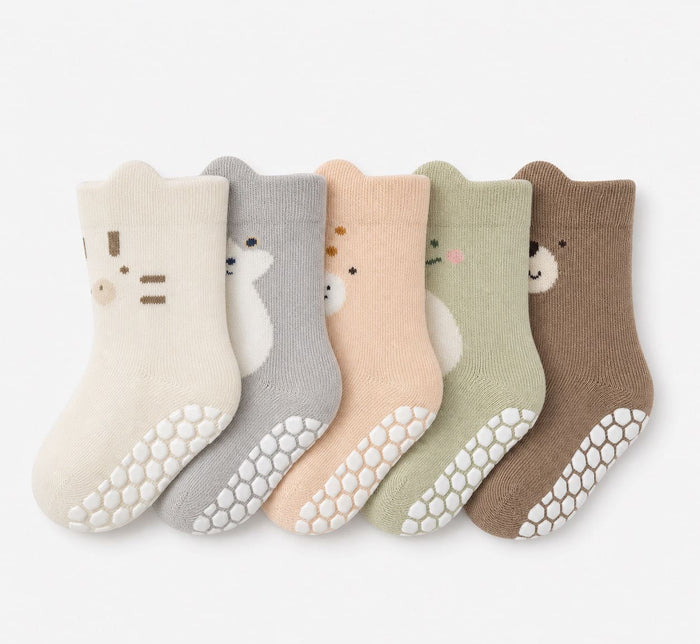
The fluffy sock. Warm, cheap, and slippery. A fleece sole on laminate is a fall. If you like these, look for rubber dots on the sole, at which point you have bought a thick grip sock, which is fine.
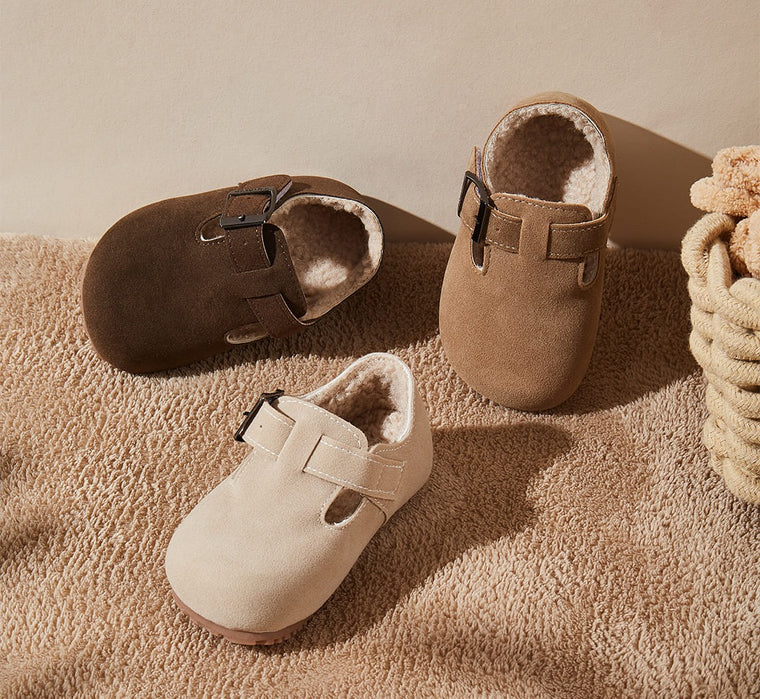
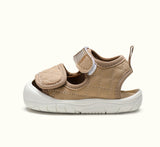
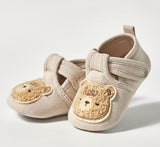
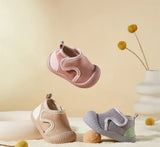
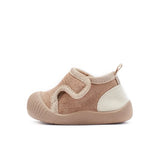
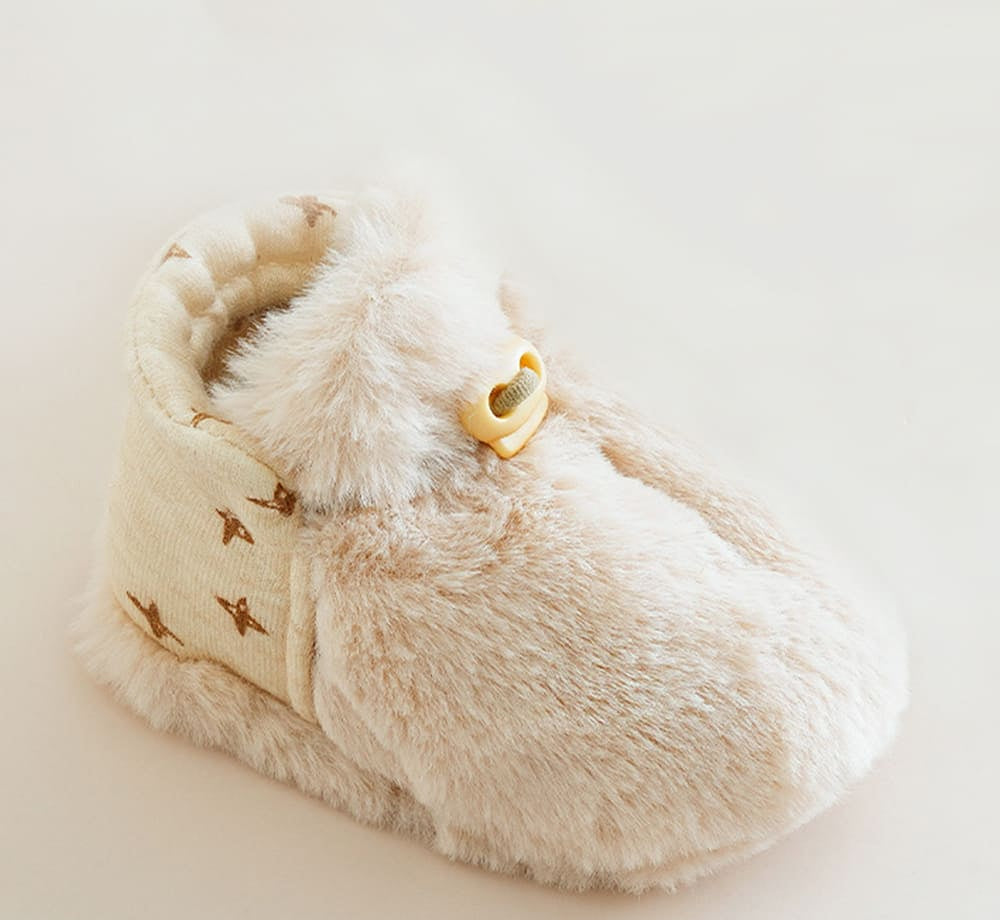
The soft sole slipper. A warm upper, usually fleece or a brushed knit, with a thin flexible sole that has some grip. This is the one. It bends where the foot bends, it goes on like a sock, and it does not fall off a foot that is kicking in a high chair. Our slippers are this kind.
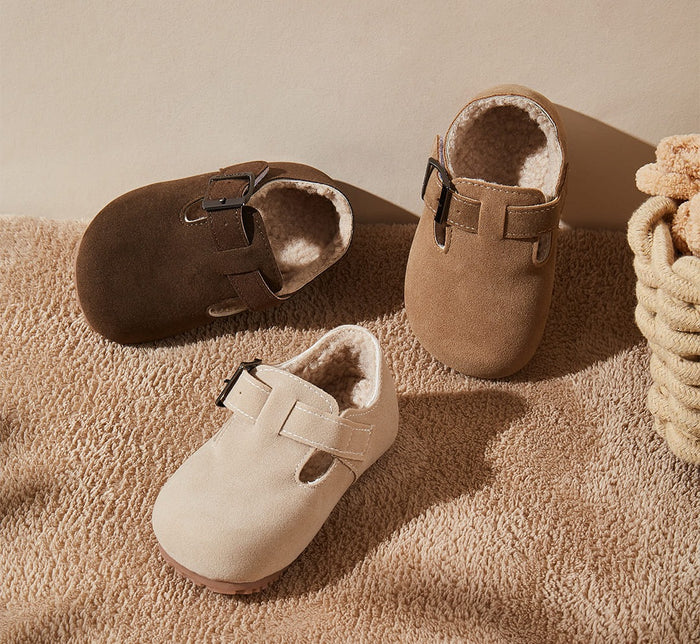
The miniature shoe. A hard sole, a stiff heel and a fur lining. It looks the part and it is the worst of the three. A hard sole indoors does the work the foot should be doing, and a stiff heel on a child who is cruising the furniture restricts the ankle at exactly the moment it is learning balance.
Slipper or sock shoe?
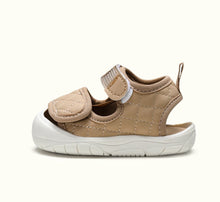
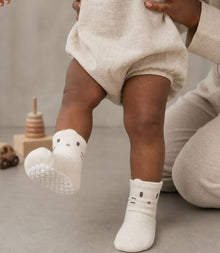
They overlap, and the honest answer is that a sock shoe does the slipper's job for most of the year. The difference is warmth. A sock shoe has a knitted upper and a thin rubber sole, built for grip. A slipper has a lined upper, built for heat. If your floors are cold rather than merely hard, the slipper wins from November on. If the main problem is a slippery floor, the sock shoe wins. There is more on the sock shoe's job in what sock shoes are actually for.
Fit still matters, even indoors
A slipper is usually sold by age, which is no better for a slipper than it is for a shoe. Measure the foot with the sock your child will wear inside it. A lined slipper takes up more room than you expect, so err on the larger size and check the heel does not lift. The two minute method is in how to measure your baby's feet, and the size guide has the chart.
Take it off after an hour and look at the foot. A red line across the toes means it is too small, however soft it felt in the hand. The same test catches a slipper that is too narrow.
Two things to avoid
Long fluffy trims and pom-poms on a child under three. They come off, and a child who pulls one off puts it in their mouth.
Wearing them outside, even to the car. A soft sole on wet concrete is slippery and the lining soaks up water. Once a slipper has been outside it is no longer warm, and it takes a day to dry. The drying rules in how to clean baby shoes apply here too: away from the heater, never in the dryer.
The short version
- Warm house and carpet: no slippers, bare feet.
- Cold hard floors: a soft sole slipper that bends and grips.
- Skip the miniature shoe with the hard sole.
- Measure with the sock on, and check the foot after an hour.